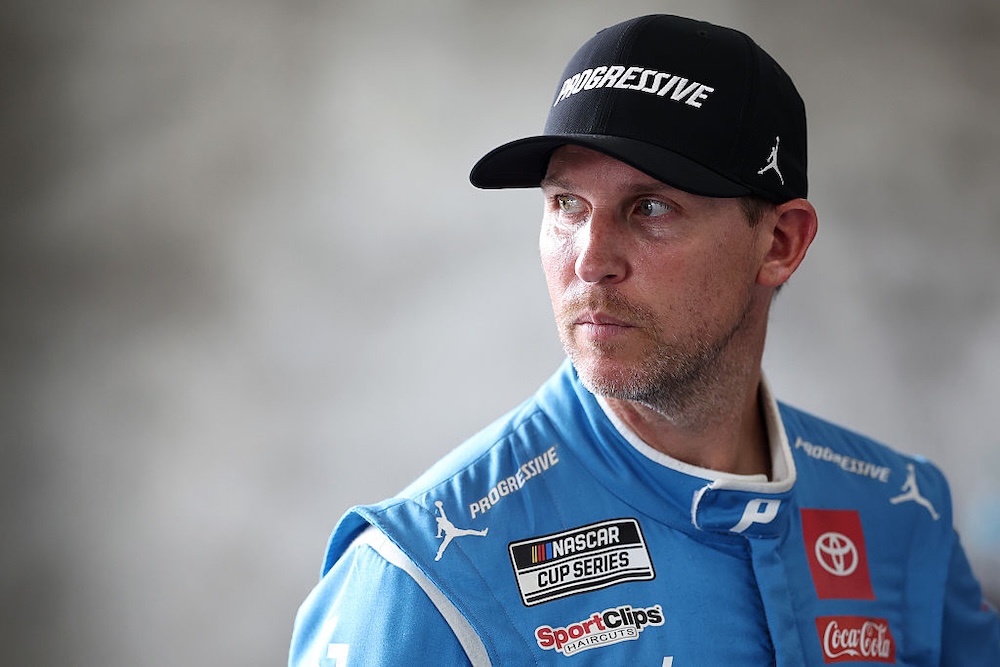
NASCAR used Denny Hamlin’s own words against him Tuesday to paint the picture that what he has stated about the sport doesn’t match what he’s accusing them of in the ongoing antitrust lawsuit.
Hamlin began the day on the witness stand to pick up where he left off Monday during the opening day of the 23XI Racing, Front Row Motorsports versus NASCAR battle. It took less than half an hour for Hamlin to finish answering questions from one of the team’s attorneys, during which he pointed out financial numbers, including the team’s NASCAR expenses of $703,000 for entry fees, licenses, testing, internet, and data.
“We get charged for the WIFI at the racetrack,” Hamlin quipped.
It was during this part of Hamlin’s testimony that he explained NASCAR Cup Series teams had been telling NASCAR for years they were struggling. Hamlin, however, was given the impression that the 2025 charter agreement would be better, which would help the teams. He also strongly rebuked the second seven-year extension in the charter agreement because it does not include a negotiation opportunity, and teams could be in a position to not receive any additional revenue from NASCAR.
“Yes,” Hamlin admitted when asked if it was hard not to sign the 2025 charter agreement. It felt like a “death certificate for the future.”
The rest of the morning featured Hamlin under cross-examination from one of NASCAR’s attorneys, Lawrence Buterman. It was during these questions that Hamlin, multiple times, got terse on the stand as he took exception to NASCAR’s questions and inferences.
It started when Hamlin’s pitch deck for Michael Jordan to launch 23XI Racing was dissected. Buterman pointed out that Hamlin listed multiple positive points for Jordan about getting into the sport, including Bubba Wallace having over $17 million in sponsorship, the Next Gen car, and the charter system.
In the lawsuit, however, Buterman pointed out that Hamlin is using the same examples to harm his race team. Hamlin accused Buterman of twisting words. He further said that he was repeating what NASCAR had told the industry about what the car would do for costs, which turned out not to be true.
Buterman spent quite a bit of time bringing up previous comments Hamlin has made, both publicly and privately, about the sport, all of which have been positive and contradict what the lawsuit alleges.
Hamlin took clear exception to this line of questioning. In addition to saying his public comments are taken out of context because he’s doing NASCAR a favor by being positive, he claimed that if he doesn’t do that, he gets in trouble. And then Hamlin refuted the notion that his comments can’t be trusted.
The positive comments in public are “talking points” and to make the fans happy.
Buterman moved on to positive comments had made privately. One example was a text message exchange with a reporter from The Athletic in which Hamlin praised NASCAR/ISC for reinvesting money into the sport with its repave projects that are well done, while then criticizing Speedway Motorsports for the botched jobs they do and taking the money and running.
Hamlin said in those messages that Speedway Motorsports is “miles behind” ISC in promotion, attendance, and facilities.
Other private messages used as examples included Hamlin talking with fellow executives from 23XI Racing about meeting financial goals for the race team. There were also emails where Hamlin expressed that he wouldn’t build a team to lose money, and they haven’t. Again, Hamlin said he is being a cheerleader and saying pos itive things because he doesn’t want his partners to get ill will toward NASCAR and leave.