IndyCar 2028: The new engine formula, explained

Advertisement

RACER’S Marshall Pruett has spent the last year tracking developments with the IndyCar Series’ new chassis, engine, and the rest of what’s on the way for 2028, which we’re presenting in a multi-part feature. So far we’ve laid out the timeline for the rollout and explained what to expect from the new chassis and how the series arrived at the new engine formula. Look out for additional installments in the coming days.

The new internal combustion engine formula coming to IndyCar will create motors that are slightly bigger and more powerful than the units found in today’s cars. But not by a significant amount.

In fact, the new 2.4-liter twin-turbo V6 template for 2028 should be familiar to those who’ve followed the series in recent years. The motors are founded upon technology that’s in play today, as the upcoming engines won’t venture far outside of what IndyCar has used since 2012 with its 2.2-liter turbo V6s. And that’s by design.

In common with the 2.2, the 2.4 will make use of high-pressure direct fuel-injection, spin to upwards of 12,000rpm, rely on forced induction from two new, bigger, and mandatory turbochargers managed by electronic wastegates, and so on. With only minor variations, the blueprint for the 2.4 is the 2.2 it will replace. Horsepower will rise, and so will the contribution from the energy recovery system, which we’ll cover in a separate story.

If output targets of 800hp with the pistons and 100 hp with the batteries are hit, the 2028 powertrain will combine to put 900hp to the ground, an improvement of approximately 100hp over 2025’s hybrid package, with headroom for that overall number to grow towards 950hp or more as IndyCar ventures into the 2030s.

The increase in power from the 2.2 isn’t meant to be strictly a function of the rise with cubic capacity to 2.4; extra turbo boost is under consideration with a bump from the current limit of 1.5 bar (21.76psi) to 1.6 bar (23.2psi) for road and street courses along with short ovals.

A NEW CHAPTER

Altogether, intensive investment and learning has been done with the current 2.2s, and with a solid foundation it wanted to preserve, IndyCar chose evolution instead of revolution for its next formula.

But there has been a significant revision in the mindset of many of those who might sign on and build the 2.4s.

The foundational change to accept is most auto manufacturers have cooled to the idea of starting or continuing to wage IndyCar wars with massively expensive and exotic engines, and that’s reflected in the series’ approach to drafting its new rules.

Today’s 2.2s are marvels of engineering that require vast sums of money to support each season, and while spending freely on highly specific IndyCar racing engines was the accepted norm for decades, today’s auto industry has not widely embraced the practice.

Thankfully for the series, Chevrolet and Honda have remained faithful and supported the 2.2 formula since it was ratified, but they’ve been alone as the rest of the world’s carmakers have considered and ultimately chosen against joining IndyCar for the last 13 years, leaving the same two brands to support a large field of 27 full-time entries.

As it stands, the entirety of the rulebook governing the 2.2s hasn’t resonated with the dozens of automakers the series would want to join IndyCar, and that’s led to a rethink on how the 2.4 rules should be crafted.

Advertisement

Beyond the upfront costs to build, support, and continue maintaining pools of 50 or more IndyCar engines per manufacturer, the annual budgetary demands for ongoing engine development to create more power, greater fuel efficiency, and improved reliability comes with a steep eight-figure price tag that’s been deemed too expensive for all but Chevy and Honda.

IndyCar’s ongoing engine lease program, which allows each manufacturer to charge up to $1.45 million per entry for the season, does help to offset some of the costs, but both brands operate at a loss with their programs. Finding ways to maintain high performance with the 2.4, while at a lower annual price point than the 2.2, has been the series’ mission as it prepares for a changeover in formulas.

ROI IS KING

When IndyCar was the most popular form of racing in the United States, manufacturer participation and sponsorship deals skyrocketed – especially in the 1990s ≠ to complement the public interest generated by the series. The return on investment (ROI) was high, and in response, a matching level of money was made available by Chevy, Ford, Honda, Mercedes-Benz, and Toyota to build fantastically creative and powerful engines.

During the CART IndyCar Series’ peak, the volcanic 2.65-liter turbo V8s became semi-disposable as the tightly wound 1000hp motors were replaced at least once per day; leading entries could fire through three to four engines each weekend. In 2025, teams use the same engine for three to four events and get four to power their cars per season.

CART engine budgets were insane as the brands poured ungodly sums of money into their racing programs, spent heavily with their best teams, and with the series through marketing and promotions. Before the series imploded in the early 2000s, CART’s ROI supported the mountain-size spending to participate.  

Advertisement

But nearly 30 years later, and with NASCAR serving as the country’s clear favorite among racing series and Formula 1 either level or slightly ahead of IndyCar by a small margin, the series doesn’t have first-place ROI to offer manufacturers. Not yet, at least.

As demonstrated by F1, which has Audi, Cadillac, Ford and Honda arriving or returning in 2026 with hundreds of millions of dollars committed to their respective programs, today’s car companies aren’t afraid to reach deep into their pockets for big racing programs if the ROI is meaningful and tangible.

It’s the same situation in IMSA and the FIA WEC, where the ROI-conscious LMDh formula is used in the GTP and Hypercar classes. Since it launched in 2023, Acura, Alpine, BMW, Cadillac, Ford, Hyundai’s new Genesis brand, Lamborghini, McLaren, and Porsche have either raced or are bringing new factory programs that require $20,000,000 or more to function each season.

That’s nine car companies voting yes on GTP/Hypercar with big budgets because of how the cost-minded rules were written, and four entering or upsizing with F1 efforts where they’re happy enough with the ROI to burn outrageous amounts of money to be in the game.

The statement is undeniable: Bring the value to a modern racing series and multiple manufacturers will make their presence felt.

Pivoting to 2025, IndyCar is immersed in positives, including a motivated new co-owner in the Fox Corporation and a remarkable jump in the size of its television audience. But with its relative place behind NASCAR and F1, the ROI IndyCar has to offer isn’t large enough to command huge financial commitments from all corners of the auto industry, and that’s why an adjustment in the series’ approach to costs is taking center stage.
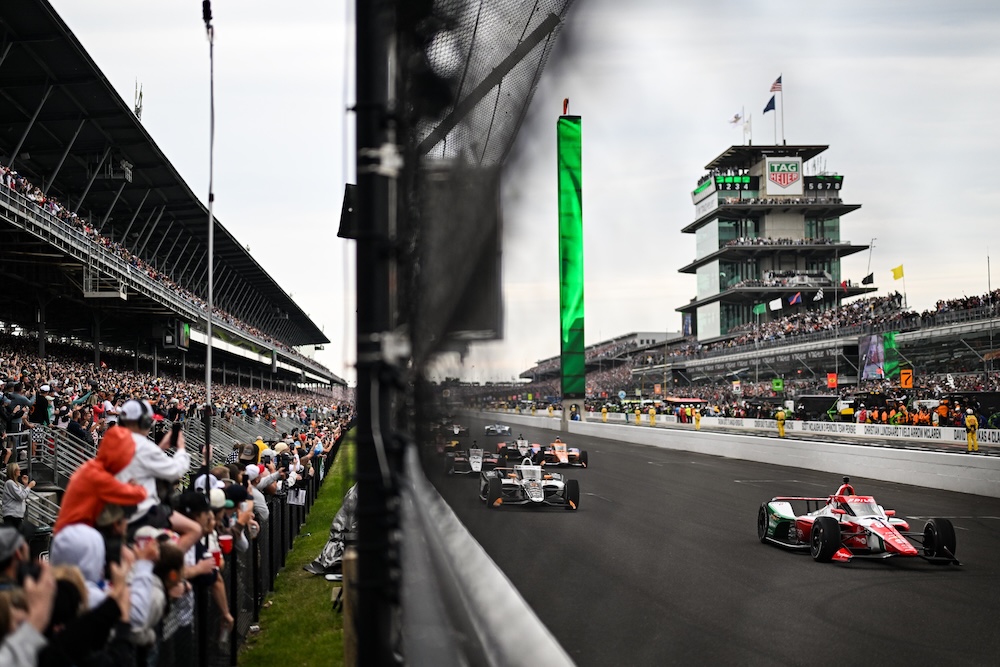
Costs and ROI took center stage when the series was determining the engine formula for 2028 and beyond. James Black/Penske Entertainment

LISTENING AND ACTING

Advertisement

With ROI in mind, the messages received by IndyCar from many (but not all) of the car companies it’s spoken with has been clear: Keep the engine displacement small, avoid a ruleset that triggers a financial arms race, and place a stronger emphasis on the electrification side of the powertrain equation.

In simple terms, the plan for 2028 is to go racing with something compact, sturdy, and familiar that doesn’t break the bank. And if advancements are going to be made, do it with the hybrid because that’s where research and development has value and relevance for a growing portion of the auto industry.  

Make no mistake; the internal combustion engine is a vital component in most road and race cars, but in this new era of hybridization and electrification, spending generously on piston-driven IndyCar engines alone – at least at the present level – has met its end.

HISTORY OF THE 2.4

It’s been a long journey to get to a point where the majority of the 2028 engine formula exists.

By the time the new motors see their first checkered flag later this decade, 10 years will have passed in the transition from concept to reality with the 2.4s. Set to replace the 2.2-liter turbo V6s from Chevy, Honda, and Lotus that debuted in 2012, IndyCar made an announcement in 2018 that brand-new 2.4-liter twin-turbo V6s would arrive in 2021.

The 2.2s didn’t pack much of a punch on debut in 2012, and with each new season, they were being pushed harder to generate the power and speeds that were originally envisioned by the series. Each push also came with increased risks to reliability.

Advertisement

With the rules requiring every engine lease to provide four motors per car that last 10,000 combined miles of running, explosions were happening at an alarming rate as the engines approached their 2500-mile change-outs. Once a motor crept towards 2000 miles, a countdown clock began as there were no guarantees it would get to 2500 without something snapping or detonating. It was an expensive problem for the manufacturers to absorb, and became an issue for IndyCar to solve as it started to contemplate what might supersede the 2.2s.

On its own, the increase from 2.2 liters to 2.4 wasn’t going to be a cure-all, but the breakages and their ensuing costs inspired new rules that called for original designs for 2021 with more material thickness in troublesome areas.

The 2.4s would offer a modest leap in power, which was a bonus, but the real motivation behind creating burly new 2.4s was engineering robustness into the formula that would restore the reliability and longevity that was being lost with the overstressed 2.2s.

“The current 2.2, and the amount of capabilities that those manufacturers have gotten out of it when you look at where it started and where it is now in terms of performance, they are truly maxed out, and in a very impressive way,” Mark Sibla, IndyCar’s Sr. VP of competition and operations, told RACER.

“The 2.4 allows us to bring down the stress that the engines are under, which also helps a bit from the cost perspective. Nobody’s really excited to understand rebuild costs, but there’s things like going to a bigger engine and not having to push it as hard as the 2.2 that you can do get more life from the engines.”

Advertisement

In August of 2019, when IndyCar announced it would be adding a hybrid component to the formula, the original target to have new 2.4s racing in 2021 was adjusted to 2022. Beset by a number of delays, the target for the hybrid 2.4 formula was then shifted to 2023. Independent from the hybrid setbacks, the larger 2.4 engines were indeed made by Chevy and Honda, and by March of 2022, the 2.4s went track testing in public for the first time at the Indianapolis Motor Speedway road course.

More testing and development continued throughout 2022 as both brands prepared to go racing with the 2.4s in 2023, but delays with IndyCar’s conversion to hybridization – something managed entirely by the series up to that point – led to another change of plans.

Despite rumors to the contrary, Chevy was fully prepared to go racing with its 2.4s. And Honda, with a new IMSA GTP program also set to go live in 2023, took a novel approach and built its 2.4s to cover two fronts by powering IndyCars and its hybrid Acura ARX-06s.

Together, their 2.4 internal combustion engines were done and ready, but the hybrid solution outsourced by the series had fallen through.

In December of 2022, just four months prior to the IndyCar debut for the 2.4 hybrids at the season-opening race, Chevy and Honda intervened and agreed to help the series by taking over the hybrid project. But it came at a cost. A lot of unappropriated money was needed to make the systems, and the only obvious places to draw from were their 2.4 budgets, which meant parking the 2.4s and sticking with the 2.2s in the interim.

The rivals joined forces to develop, manufacture, and track test the hybrid systems in the latter part of 2023, and under the revised timeline, Chevy and Honda would bring the new 2.4s and their new energy recovery systems to bear in 2024. But that was also subject to change.

Advertisement

Hybridization would eventually arrive in June of 2024 with a midseason debut at Mid-Ohio, but the 2.4s remained silent as the series and its manufacturers opted to stick with the trusty 2012-era 2.2s until IndyCar delivered a new chassis to market.
The series positioned 2027 as the year where the chassis would replace the Dallara’s DW12 – also a product that originated in 2012 – but that, as well, was given another 12 months to gestate.

With 2028 finally set usher in a new Indy car model from Dallara, and after more than a year of weighing its engine options, IndyCar selected the stillborn 2.4 formula as the regulatory framework to power the car.

And that brings us up to date on the new engine formula’s backstory.

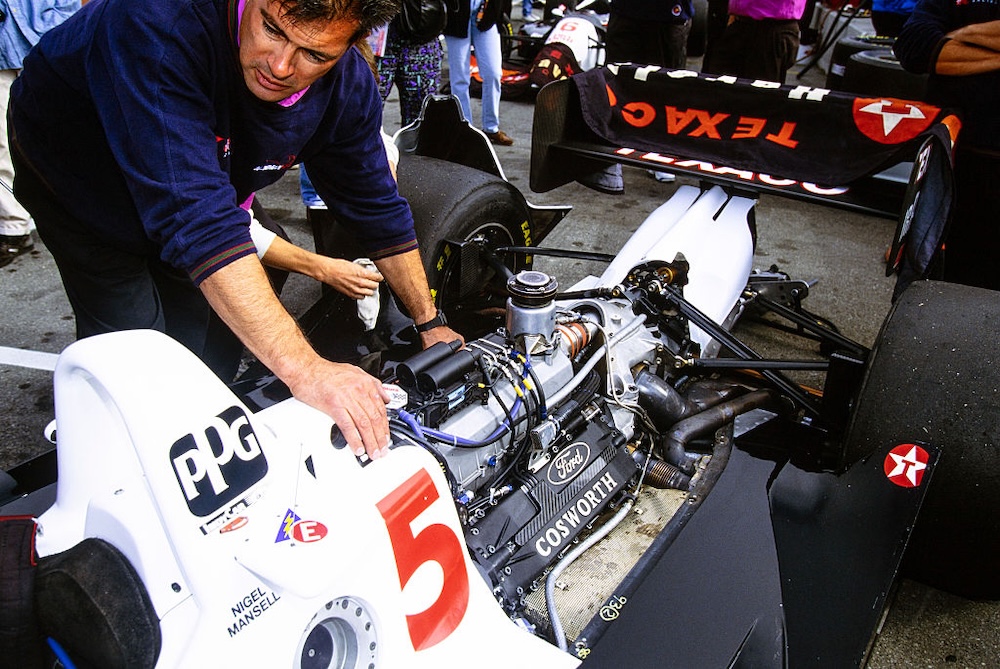
Engines were designed to live a short but spectacular life during Champ Car’s glory years. Now, the emphasis is on durability. Steven Tee/Getty Images

CURRENT STATUS

We know the original 2.4 formula that made it as far as track testing in 2022 is what will serve as the basis of the 2028 formula, but this isn’t a case of pulling those motors out of storage, nor is it a pure copy-and-paste of the previously-written specifications. In fact, the 2.4 formula isn’t completely finished and ready for manufacturers to start cutting metal.

Some slight tweaks to the 2.4 are still in the conceptual phase and the series expects to have the remaining details solidified prior to 2026.

“It needs to be honed in, and that needs to happen before the end of the year,” Sibla said.

Although they are similar in almost every way, the greatest difference between the 2.2 and the 2.4 is the fact that the 2.4 is a brand-new engine, and that’s a good thing.

Advertisement

As the 2.4 formula was coming together ahead of the 2018 announcement, one idea was to simply take the 2.2 and upstroke it by 200ccs to reach 2.4 liters, but there was an important reason to avoid repurposing the existing motors.

Separate from the need to improve reliability with thicker material in some areas, IndyCar found potential new manufacturers were reluctant to join the series if it involved using a slightly revised 2.2 formula.   

“As we were talking with prospective suppliers, so many of the conversations would be, ‘GM and Honda are really good at motorsports, and if they’ve been developing their engines for 10 years, how much am I going to have to invest to try to even catch up?’” Sibla recounted.

“So the barrier to entry was just way too high, especially if it was keeping the same formula or just doing slight alterations to the base package. That’s a lot to ask.”

The remedy for 2018 was provided by starting fresh with a clean-sheet 2.4, and the need to level the internal combustion engine playing field for new manufacturers is no different for 2028.

STYLES AND CONCEPTS

The physical dimensions of the 2.4 mirror the 2.2 to the point where their lengths, widths, and heights are essentially identical. Only a true expert would be able to tell the 2.2s from the 2.4s, and in the original specifications that were made and tested a few years ago, the 2.4s bolted directly into the same DW12 mounting points used by the 2.2s.

But with the added time to contemplate what’s best to use for 2028, the style of 2.4 engine that has been approved came as a surprise.

Advertisement

Like its winding backstory, the path to what’s on the way in a few years has taken many turns. As I checked in during the talks that were happening in 2024 and early 2025, one concept seemed to be assured, and then an entirely different concept would gain favor, and then it would change once more.

In the end, the chosen path for the 2.4 is one that I never thought would come to pass.

Although nothing had been officially decided, the general consensus almost a year ago was that the time-honored practice of creating purebred motors – ones like the 2.2 that are 100-percent original to each manufacturer – would be farewelled. In the name of cost reductions, ditching the bespoke, high-dollar formula behind the 2.2s and the parked 2.4s appeared to be a sure thing as some form of spec engine was going to be the new way forward.

As the thinking went, if manufacturers committed to making use of single-source items like the block or heads, or both, and possibly more, the extreme costs to participate as engine suppliers would be reduced. Simpler engines would come at a simpler price, the messaging received from the auto industry about avoiding exotic engines would be applied, the runaway budgets would come down, and everyone would be happy.

To that end, IndyCar explored a few budget-minded avenues, including a short-block formula where select components would be spec but most items were left open for individual creation and development. It also looked at a long-block formula where the majority of the engine would be spec and comparatively few areas of creative freedom were allowed.

Going fully spec was discussed, but was deemed a non-starter as the manufacturers wanted some creative leeway to express their ideas and individuality through design.

Advertisement

In theory, the semi-spec, semi-original engines would rein in costs and make it easier for more manufacturers to join IndyCar due to the smaller budgets needed to participate as suppliers. The unused 2.4 formula could be the starting point, but re-written as a spec-first motor.

RUN THE NUMBERS

With a good feeling for what the differing short- and a long-block formulas would demand from the manufacturers, cost assessments were performed with an expectation of seeing significant savings compared to what’s being spent now on the fully unique 2.2s.

To their collective surprise, the spec-savings theory didn’t match reality as the forecasted cost reductions weren’t as significant as desired. In turn, the spec-first approach was shelved. Another flaw in the theory was also exposed during the cost analysis.

A semi-spec formula, in isolation, would strip away a range of areas where the manufacturers could otherwise spend with abandon, but there was nothing to stop each brand from doubling or tripling their development budgets on the limited areas left open for improvement.

The rules could be penned to make the 2028 engines 90-percent spec, but as car companies have done for ages in the sport, they’d spend themselves into oblivion trying to exploit every possible advantage with the 10 percent that was left open for development.

Yes, creating spec-ish engines would help with the upfront costs while manufacturing and maintaining dozens of motors, but there were no protections in place to curb the backend costs with ongoing annual engine development.

The long road to define the new engine spec ultimately led IndyCar back to a ruleset very similar to the current one. Joe Skibinski/Penske Entertainment

AS MUCH AS 100 PERCENT

And that’s where the surprise emerged in how IndyCar would fashion its 2028 engine rules. The long and twisting road to the 2028 engine regulations has, in almost every way, come back to where it started in 2018.

Advertisement

It might not be the same 100-percent freedom in design as they’ve had for decades, but what’s in motion for 2028 also won’t be radically different from the exotic 2.2s and the original 2.4s.

Spec-first concepts with short- and long-block solutions were vetted and forgotten, and in the end, the very thing that was up for elimination – the pricey fully-custom formula – has survived, albeit with a few concessions that could dial the 100-percent originality down by a few points.

It’s also possible for the series to skip the use of common parts, stay at 100 percent, and permit its manufacturers to design and made every piece of their engines. We won’t know until the end of the year, and once the remaining decisions are made, a rulebook can be printed and distributed.

“There’s very small things that we’re still going to decide if this particular component is better to be common for everyone,” Sibla said. “There are some areas where it just makes sense to make this part common. It can help bring costs down. It could also be a little bit better on teams. If you do have any movement amongst different engine manufacturers, your engine install kit certainly changes from brand to brand. Something to look at making common is the installation, no matter whose engine is in the car, and that can be a bit more evergreen.

“Things like this, when we talk to manufacturers, they all seem to be themes that folks agree are a way to certainly bring those costs down. And in essence, the regulations really need to be agreed upon and decided by the end of this year.

BIG SHIFT IN THINKING

Advertisement

So, how will making new motors that are somewhere between 95- to 100-percent custom satisfy the desire to carve away at the costs to compete? By addressing the behind-the-scenes expenditures that swell their budgets.

As conversations arose between the series, its current manufacturers, and those who’ve expressed an interest in learning about where the series is taking its powertrain formula, a smart thread occurred on how IndyCar might go about removing the reasons for car companies to burn through vaults of cash on their annual engine development programs.

There’s the standard areas where manufacturers continually spend their development dollars with finding more power, better fuel economy, and so on, and that won’t change in the new 2.4 formula. That’s the normal part of racecar engine development, but it won’t be an open menu. Just as it’s done with the 2.2s, IndyCar is writing a year-by-year homologation schedule for the 2.4s which governs the things that can and can’t be modified each offseason.

The most expensive items like heads are given longer homologation periods – they must be used for three years, or five, for example, before a revised design is eligible, and that’s done to keep manufacturers from reinventing their motors on a continual basis. For the simpler and less expensive components like pistons, IndyCar might go with a one-year homologation window to allow more frequent updates.

The same homologation approach is in motion for 2028, but the list of items, and the durations they’ll be off limits for improvement, is going to shrink.

Advertisement

“You look at that homologation table of what’s open, what’s available to modify, and there’ll be an initial development period, but then once you get those engines in a good spot, you can heavily restrict that homologation table so that you don’t have this yearly, ongoing development,” Sibla said.

“Because if the only open item was a screw, you’d have them turning it into a $15 million screw, looking for every advantage. So one is being smart about that homologation table and in in locking it down.”

IN THE WORKS

The emphasis for 2028 is on creating an excellent engine that won’t need frequent componentry redesigns and intensive development, but that doesn’t always happen. And even if all of the new engines perform equally in the first season, one manufacturer is bound to make more gains than the others during the offseason leading into 2029, and it could change in another brand’s favor in 2030, and so on.

It’s where the avalanche of annual spending starts for one car company to try and keep its advantage, and an even greater outlay from the rest who are playing from behind.

That’s precisely why the new line of thinking has materialized from IndyCar and its manufacturers. Instead of doing as they’ve always done, they’re seeking ways to halt the huge engine R&D cash burns, and the first thought was to try a modest version of what’s known as Balance of Performance (BoP), but in a very different way than it’s deployed in sports car racing.

BoP is coming, but it will be very different to what sports car fans are used to. Michael Levitt/IMSA

BALANCING ACT

The exact construct of the process is being figured out, but the inspiration for adopting a BoP system starting with the 2028 engines is to prevent the incendiary backend R&D costs.

Advertisement

In IMSA, WEC, SRO, etc., BoP is used as an ongoing performance adjustment system that adds or removes power, torque, revs, weight, or downforce to keep different models of prototypes and GT cars in line with each other on the stopwatch. It’s rarely successful in truly balancing all cars at all times, but BoP is accepted by manufacturers as a way to push models forward or pull models back to try and keep one brand from running away with the championship and others from being stuck at the bottom of the class.

In sports cars, BoP changes tend to happen every few races, and it leads to constant lobbying and complaints as the dominant brand of the moment invariably has something taken away to slow their cars and the others are given breaks with more of whatever the series sees they are lacking.

Manufacturers harass sports car sanctioning bodies without mercy during and after each race, threatening to leave unless they’re given the power or weight break or whatever they insist is needed, and do everything in their power to skew BoP decisions to their benefit.

With the BoP process IndyCar is considering, it would not be subject to the same unsavory routine, and would not involve race-by-race performance adjustments. IndyCar’s concept is one of observing and intervening if and when performance disparities are seen to prevent its manufacturers from emptying their bank accounts on R&D programs to address their shortcomings.

It’s the use of BoP as a financial prevention tool, done through another staple of sports car racing with the installation of torque sensors. The axle-mounted torque sensors aren’t inexpensive; each car set is approximately $70,000, and with spares and annual maintenance and repairs, the first-year outlay can exceed $200,000 per entry.

But those sensors can be used as a powerful tool for IndyCar to receive real-time acceleration and deceleration telemetry data from each car and use that information to quantify the performance attributes with every engine.

Advertisement

Quietly, and without fanfare, IndyCar has already been using its own torque sensors to benchmark the 2.2s from Chevy and Honda at select events during practice sessions and at tests, which would make their wider use in a more formal manner much easier starting in 2028.

“We do torque shaft measurement now on certain entries,” Sibla said. “And that changes throughout the season, and that is to make sure that you don’t have a runaway situation, that there is a percentage (of parity) between the engines, and that’s constantly looked at and monitored.”

In IMSA, torque sensors supplied by MagCanica help the series to understand how power and torque is made and where it’s seen from its GTP manufacturers, and in a new expansion for 2025, torque sensors were added to its GT3-based GTD and GTD Pro cars as well, giving the series a constant, comprehensive, and independent look into how the different models make their lap times.

It’s here where IndyCar can use torque sensors to benchmark the 2.4s with great accuracy. Unlike IMSA, where all of the cars are different in significant ways, IndyCar’s spec 2028 chassis from Dallara, spec hybrid system that’s out for bid, spec transmission from Xtrac, spec tires from Firestone, and spec fuel from Shell will eliminate almost every aspect of individuality from performance monitoring and isolate the internal combustion engines for in-depth reviews.

IndyCar would be able to assess if Brand A’s 2.4 is slightly lacking in low-end torque or mid-range power or top-end acceleration compared to Brand B’s 2.4, and in lieu of Brand A spending untold millions to find what’s missing, the series would step in to grant an extra provision of boost in a specific part of the rev band or some other concession to bring Brand A back into the fight.

Advertisement

“So when you move to the 2.4, because there’s less stress on that engine overall, versus, say, the 2.2, it does give you a little bit more that you can finesse on, that are more cost effective ways if somebody happened to find themselves outside of those percentage ranges to the other competitors. So that certainly can be done in a manner that helps save manufacturers on budget,” Sibla said.

There are plenty of old BoP-inspired arguments to be rehashed here with variations on whether it’s fair to punish the leading brand by helping the underperforming brand, but the spirit of using BoP as a cost-savings device to make IndyCar more financially viable for the auto industry is a new wrinkle that takes the conversation out of competition-related debates, and moves it into the realm of budget and relationship preservation.

“The pathway that we’re looking at when you come to those torque measurements is to be able to monitor, ‘Are you in that range?’” Sibla added. “You want parity, but you don’t want that to necessarily be artificial, but you need to have a good understanding of how engines are performing and if they’re in those ranges that you need.

“So as it sits right now, we’re looking at how you evaluate the field and make sure that they’re in the same ballpark. It’s making sure that they’re in the in the range versus the true sense of what others think of as BoP.”

Simply put, if IndyCar can give Brand A the small performance dose it needs to get back in the game, and that concession keeps Brand A from tearing through $2.5 million in R&D costs to find it on their own, the series would be doing itself and its manufacturers a favor. The creative use of BoP in this manner has, according to Sibla, received favorable feedback.

Advertisement

“It’s been open discussion with everybody involved, as well as checking your thought process with those that aren’t involved, to say, ‘Hey, this is a pathway we’re going does it make sense from what you’re seeing in motorsports you’re involved with,’” he said.

“And so far, with this, and maybe some common parts, and the homologation table and locking things down, all of those seem to be themes that that folks agree are a way to certainly bring those costs down.”