Jay Frye had no idea he was about to lose his job as president of the IndyCar Series. The unceremonious call was made in early February and no reason was given for his termination during the call, which came just weeks ahead of a new season he’d spent months preparing for with the rest of his IndyCar operations team.
During the 10 years of leading the American open-wheel racing organization, Frye’s motto of “Make S*** Happen, Get S*** Done” was spoken on a daily basis within the ops team. His commitment to doing what he felt was best for the series—living the MSH/GSD ideology—took precedence over appeasing his bosses. Frye’s a hardcore competitor, and as the political tides changed in the workplace, his racing-first, paddock-first approach likely brought an end to his tenure as the commissioner of the league.
It was a cold and stinging rebuke for such a loyal character, but the former NASCAR team owner made a positive impression on many of IndyCar’s team owners while leading the series. It’s here where Bobby Rahal, whose Rahal Letterman Lanigan Racing outfit was losing ground to its IndyCar rivals, saw great value in the free agent.
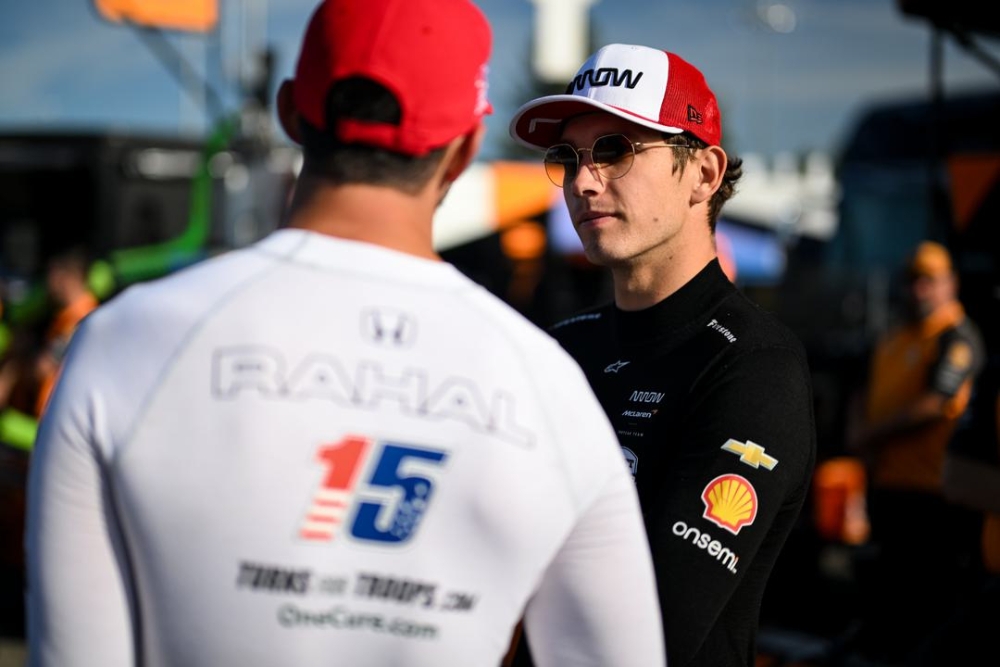
Years of ineffective leadership and errant decision making within RLL’s IndyCar program turned the team into a backsliding mess by 2023 that struggled to qualify for the Indianapolis 500—a race it had won in 2004 and 2020—and lost Christian Lundgaard, its brightest young talent in ages. The Dane, having grown tired of the team’s hit-or-miss output, held on for three seasons but departed at the end of 2024 for the front-running possibilities offered by Arrow McLaren.
If there was an IndyCar squad more than any other that needed a new leader to come in and MSH/GSD, it was RLL, which hired Frye in April, one month after the season started. All of the deals for 2025 were done long before Frye arrived; major alterations would have to wait until the offseason.
Christian Lundgaard departed for Arrow McLaren. James Black/IMS photo.
Without Lundgaard who rose as high as eighth in the championship for the team, RLL plumbed new depths as veteran Graham Rahal, talented but inexperienced Indy NXT champion Louis Foster, and young journeyman Devlin DeFrancesco combined to finish 19th (Rahal), 23rd (Foster), and 26th (DeFrancesco) in the 27-car field. Promise was shown on road and street courses, but on most occasions, a strong qualifying performance or encouraging run during whichever race went unrealized at the checkered flag.
Thanks to his in-season arrival, Frye was afforded the time by RLL’s owners to watch how it went racing and scribble observations into his ever-present notebook: Too much talent resided within the team and too much money was being spent for RLL to be such an afterthought.
In some areas, fixing the problems needed the precision of a scalpel while others deserved a sledgehammer’s swing. RLL was also in dire need of a culture shift. A priority was placed on rooting out malaise and negativity as the new MSH/GSD boss preached a fresh and open-minded belief that RLL best days were waiting to be discovered.
Advertisement
It’s a process Frye had gone through more than once before landing at IndyCar where he’d run small NASCAR teams, big NASCAR teams, done sponsorship and driver deals that ranged from modest to monumental, and built impressive things with committed tribes. Even as IndyCar’s president, a title that conjures images of power and self-importance, Frye downplayed the notion and referred to himself as a ‘team guy,’ a person who cared little for the spotlight and preferred to be in the proverbial trenches with his teammates.
The former Missouri college football player grew up playing organized sports and spent most of his early life in locker rooms, part of a collective with fellow athletes chasing the same victories. Frye’s ‘team guy’ approach was born there and carried forward to become his core in racing–an asset while improving his NASCAR teams.
It was also viewed as an invaluable attribute by Rahal, David Letterman, and Mike Lanigan, who needed someone to take control of RLL, identify its weaknesses, and construct a spirited plan with motivated players who wanted to dig their way out of the yearslong dive.
“Jay gets shit done, makes shit happen. That’s not a saying. That is a philosophy,” Bobby Rahal told RACER. “And I just have to tell you, I’ve been so pleased. I mean, this guy doesn’t sit around. He’s very proactive, and he doesn’t wait for anything or anyone. He just knows what he wants to do and just starts to get it done. And the energy that he brings to the organization is much needed in the direction, the example, and all the things you can say about a leader. There’s no doubt in my mind that Jay Frye is a hell of a leader and it’s been great to watch it, to trust it.”
Among the leading items in Frye’s notebook to fix was RLL’s third car, which never lived up to its intended purpose.
Advertisement
It was piloted by some skilled and well-meaning drivers since its launch in 2022, but the likes of Jack Harvey, Pietro Fittipaldi, and DeFrancesco weren’t able to make a competitive impact. The sponsorship they brought was important to the team, but the third car was an anchor—little more than a cash-generating device—that dragged RLL’s potential down.
Getting better results out of the third car wasn’t a simple case of Frye needing to go out and secure a stronger driver; this was a business restructuring to execute before any other steps could be considered. Changing the third car’s financial model from being an entry for hire to finding the sponsors to support the car is where Frye started, which would allow RLL to seek and employ a high-caliber driver of its choosing.
An outreach in September from former RLL IMSA champion Dirk Muller, who looks after Mick Schumacher, set Frye’s imagination alight with possibilities and scenarios where every aspect of RLL’s third-car problems could be resolved with an ex-Formula 1 driver searching for a new racing family.
Muller spoke with a few other teams about testing Schumacher, but Frye was the only one to act instead of asking how much money the 26-year-old could bring. Frye did the opposite by employing the MSH/GSD routine and found the budget to fund the test within a week. It showed the Schumachers that RLL was serious about establishing a relationship, which went from strength to strength, as a mid-October test was arranged by Frye at the IMS road course.
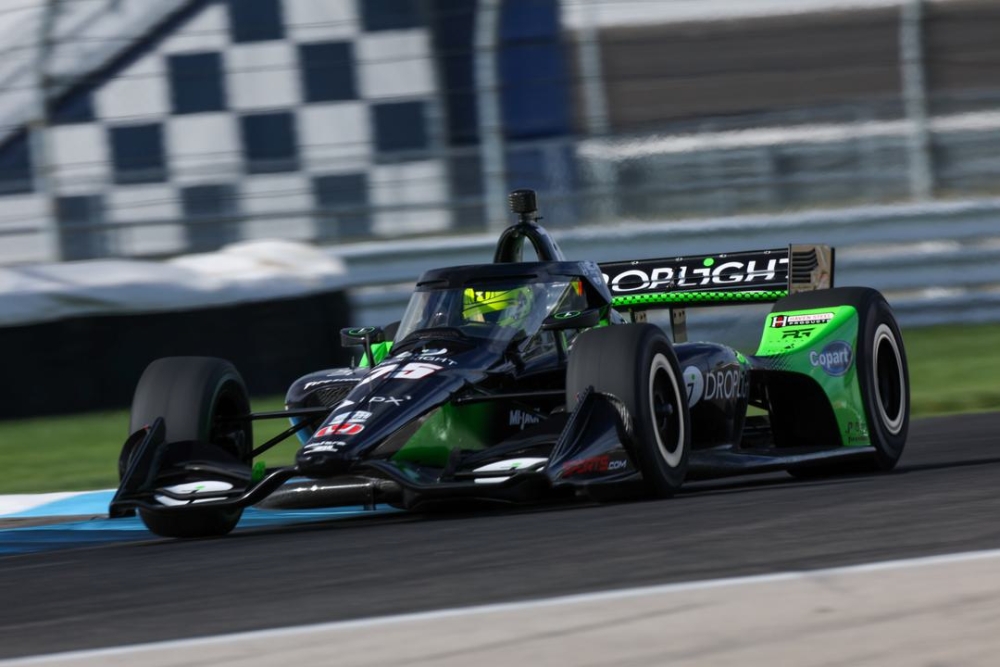
Mick Schumacher is the latest driver to fill RLL’s third seat. Chris Owens/IMS photo
Advertisement
In the unfamiliar Dallara DW12 Indy car, Schumacher was fast, unbothered, and was praised for delivering technical feedback that left the crew smiling and energized. They didn’t know what to expect from Michael Schumacher’s son; cold and distant is the stereotype for F1 drivers, but he treated RLL’s staff like they were old friends, and with overwhelmingly positive input from all areas, RLL’s leaders were determined to keep him. Sponsors, having seen the kind of media interest Schumacher drew from a single outing at IMS, want to be part of the story.
The test was never about whether Schumacher was good enough for IndyCar; that part was obvious. It was a test of fit and potential for both sides, and afterwards, Frye—the ‘team guy’—was hailed by Muller and the Schumachers for creating such a warm and welcoming environment during their trip. The culture he was establishing within RLL matched the close-knit dynamic found inside their family, and by late November, Schumacher said yes to joining the program, which completed Frye’s latest efforts to MSH/GSD.
Schumacher’s No. 47 Honda is likely to have the exemplary Heath Kosik as his crew chief after he recently rejoined the team following spells at Chip Ganassi Racing and Arrow McLaren. Frye’s also recruited fellow former IndyCar president Brian Barnhart, previously with Arrow McLaren, as RLL’s Sr. VP of Operations, and Schumacher will benefit from the improvements brought by another returning talent in championship-winning mechanic-turned-pit-stop-manager Kyle Sagan.
Frye’s latest acquisition, championship-winning race engineer and former Arrow McLaren team principal Gavin Ward, is one more element in his post-season recruitment effort for RLL’s benefit, and there are more people who are on their way to the program.
Advertisement
“This guy is a fighter,” Rahal added. “He’s a competitor, and we’re seeing that within our organization, and that brings so much excitement. You know, I had somebody in the company tell me today that the vibe in the team is so positive right now. And I give Jay the credit for that. I really do. He’s got guys like Gavin Ward coming on board. Guys like Brian Barnhart, who I have a lot of respect for. And now Mick, and there’s others.
“And then we’ve got [technical director] Todd Malloy and a bunch of superb people who’ve been with us through thick and thin that they’re joining. They’re the ones who are the foundation of what Jay’s building on top of. I think there’s every reason to be very optimistic for 2026.”
The heaviest challenge Frye and RLL will face is one of managing expectations with the retooled driver and team lineups.
Like every high-level IndyCar newcomer, Schumacher will impress at many tracks and make a mess of others—including first-ever oval runs–during his rookie season. Taking a page from Lundgaard who came straight from F2 in 2022 to run 14th as a rookie to winning a race and two poles along the way in 2023, Schumacher has the ability to impress from the outset in IndyCar.
Foster is ready to make the biggest leap for RLL in his sophomore season, and Rahal, who placed seventh in the championship as recently as 2021, is still capable of being that guy; RLL had three finishes inside the top seven in 2025, and all three were delivered by the 36-year-old Rahal.
On average, the trio of Rahal, Foster, and Schumacher should move RLL up IndyCar’s pecking order, but considering where the team ended in 2025, it will take more than a single offseason of progress to routinely bother the heavyweights at Ganassi, McLaren, Andretti, Meyer Shank, and Penske.
Advertisement
Getting back to the midfield is the first order of business, and from there, a reintroduction to the top 10 with at least one of its entries is the next step to take.
Frye and RLL wanted to field three fully pro IndyCar entries. Schumacher wanted to reboot his open-wheel career in America. And businesses are wanting to attach their names to Schumacher’s No. 47 Honda.
There’s genuine momentum happening down on the shop floor, inside the team’s engineering and commercial offices, and at IndyCar, where it will benefit from Schumacher’s social media reach of 5 million total followers, which is more than the rest of its drivers, combined.
All byproducts of MSH/GSD.
“I think if anybody doubted in our team that we’re here to win,” Rahal said, “despite the nice building and despite all this other stuff, I think Jay has put an exclamation mark on the fact that RLL is committed to winning races and championships. And it may take some time, but that’s where we’re headed.”
We use cookies to ensure that we give you the best experience on our website. If you continue to use this site we will assume that you are happy with it.