Can a ‘new’ Red Bull keep the old magic that made it an F1 powerhouse for 20 years?

Advertisement

Red Bull Racing is a team transformed to the point where next season should be considered as the start of its second era in Formula 1. The question is whether this has been reimagined and enhanced to rise to the challenges of the next 20 years, or if the magic that made it so successful has been lost?

When Red Bull co-founder Dietrich Mateschitz lost his battle with cancer in October 2022, the company’s F1 operations could never be the same again – at least, not in the medium-to-long term. What was less clear is exactly what form this shift might take, but few would have imagined it would be so extreme that, heading into 2026, all of the key leadership figures that made the team great would be gone.

Mateschitz’s unique position meant his absence couldn’t fail to precipitate change. He owned 49% of Red Bull as a whole, with the family of fellow founder Chaleo Yoovidhya holding the other 51%, but had management control of almost all of its activities. An autocratic leader, his vision and enthusiasm drove its motorsport involvement and helped to build Red Bull into a company that was turning over in excess of $10billion when he passed away. And it has continued to grow since.

He was profoundly influential in F1 through his ownership of two teams – 20% of the grid – after having been asked to save ailing Minardi when Paul Stoddart could no longer keep it going and unexpectedly adding a second team to his stable in September 2006. Yet the power he wielded belied the low profile he kept. Mateschitz eschewed the day-to-day politicking in the paddock and was in no sense an autocrat in the interventionalist sense. For some, such influence is a status symbol to be flaunted; for Mateschitz, it was a tool to be used only when necessary. For the rest, he had his ‘vicars on earth’ to do the job.

He only occasionally made public pronouncements, but when he did they carried weight. A quit threat from Red Bull meant something, and was not overused, giving him political power that was cleverly wielded and helped his team to transform grand prix racing. Don’t underestimate how profound Red Bull’s effect was on the direction of F1, particularly when it came to testing the limits of – and ultimately breaking – the well-intentioned but fragile cost-control attempts of the resource restriction agreement and its successors.

After 2022, that dynamic became impossible. No longer was it Mateschitz’s pet project, it was now clearly a part of a more conventional global corporation. Writers of fiction and histories throughout the ages are all too familiar with what the loss of such a power center can mean for an ecosystem of this type, which once benefited from such leadership and stability.

So how did we get from that to Red Bull Racing, the fourth most successful team in grand prix history with 130 wins, being irrevocably changed with team principal Christian Horner, motorsport advisor Helmut Marko, technical supremo Adrian Newey and sporting director Jonathan Wheatley all gone? And just how different is the ‘new’ Red Bull?

Advertisement

Fundamentally, it is more corporate. While Mateschitz’s son, Mark, inherited his stake and remains heavily involved, the team now falls under the oversight of Oliver Mintzlaff, Red Bull’s CEO of Corporate Projects and New Investments. He was conspicuous at a number of grands prix this year after Horner’s departure in July, but also has oversight of Red Bull’s many other sporting properties, including the soccer teams RB Leipzig in Germany, RB Salzburg in Austria and the New York Red Bulls. There’s also a larger committee that is part of that management process.

Mintzlaff is a key player in the changes made. He recently spoke of “distractions”, or rather the desire to remove them, being a motivating factor. “It was an open secret that too many things were going on in and around the team,” said Mintzalff earlier this month. He characterized the revival of form and Max Verstappen coming within two points of winning the drivers’ championship as symptomatic of the renewed focus that came from the changes. Horner, and the baggage he carried, was clearly considered a big part of this. However, Horner also had more power and control over Red Bull’s F1 empire than could ever sit well with the wider Red Bull company, so it would be naive to imagine that curbing this wasn’t part of the equation.

Advertisement

Laurent Mekies, appointed as CEO and team principal in Horner’s place, holds the same job title but not the same power. How could he, given Horner built up the team and therefore weaved himself into every aspect of its activities? Mekies is a razor-sharp engineer, intelligent, with plenty of management experience from Racing Bulls and Ferrari, where he was deputy team principal, before that. However, he is more focused on the engineering side, and while his role stretches beyond that, compared to Horner he’s far more a functionary. This isn’t meant as an insult to his abilities, merely that the corporate shackles that Horner shook off, if he ever had them to start with, are firmly clamped to him. It was Horner’s company, but Mekies is a company man and his power is contained.
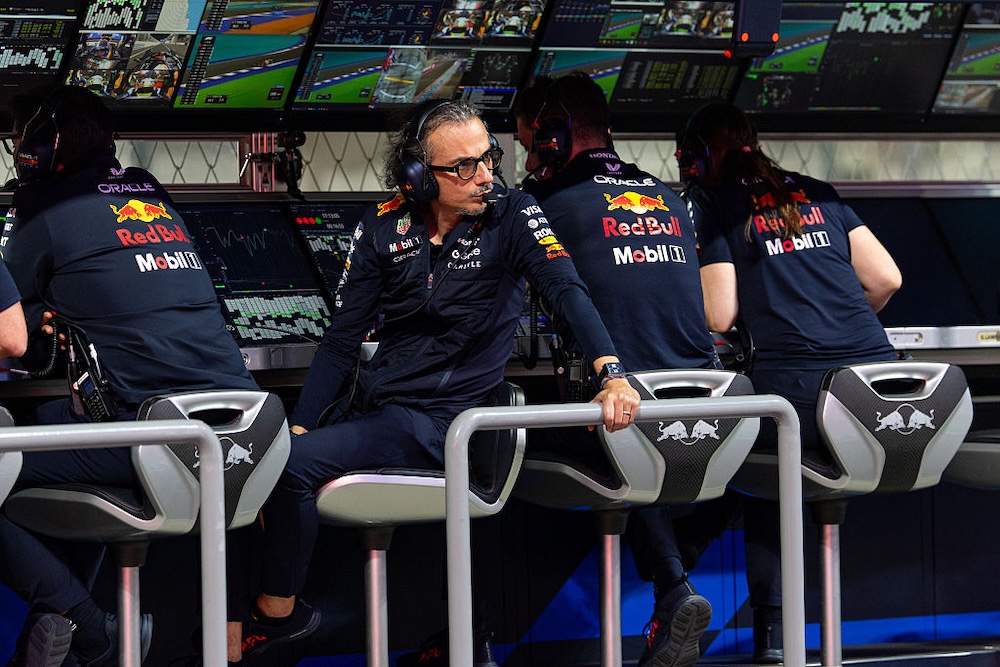
Team leader Laurent Mekies is more engineering-focused than his predecessor Christian Horner, but has far less political power. Kym Illman/Getty Images

The risk here is not only that Red Bull F1 – and remember, this now includes a full-blown power unit manufacturer among the multiple companies that make it up – might no longer be the same player politically. Horner was an accomplished operator, one with close relationships with all the key players and a couple of decades’ worth of battlescars from various off-track wars. Mekies has kept a lower profile, and while he could yet grow into that role, his brief is more to keep his head down and make the team work as well as possible. There’s no chance Mintzlaff will be able to do what Horner did politically, but he might need to at times if Red Bull’s more corporate approach doesn’t empower those in the day-to-day roles sufficiently. He’s talked of the need to do that, but it’s one thing to talk the talk and another to actually deliver.

The technical side of the team remains largely unchanged. Pierre Wache leads it, and while Adrian Newey’s departure was a major loss that was partly precipitated by him being, in his eyes, undervalued and marginalized, that was something that was already drifting towards happening before Mateschitz’s passing, even if the man himself didn’t realize it yet. The facilities remain first-rate, with the brand-new state-of-the-art windtunnel due to come online in 2026. That replaces a facility that, while well-equipped, was too temperature-sensitive owing to its structure being, as Horner put it, “a Cold War relic”.

Advertisement

There have also been personnel changes in the garage, the latest being Max Verstappen’s long-time race engineer, Gianpiero Lambiase, who is set to move into a different role. But while moves such as Wheatley joining Sauber as team principal, ironically partly because he couldn’t see opportunities for advancement within Red Bull are a loss, the team continues to execute well trackside. The main question is whether that might degrade over time, and the extent to which its car troubles in ‘25 were exacerbated by set-up approaches that were never going to work or an over-confidence in simulation tools that prepared such directions.

Marko’s departure is the clearest signal of the shift towards greater corporate accountability. His ill-founded claim that Kimi Antonelli had deliberately let Lando Norris past in the Qatar Grand Prix, which triggered abuse on social media, was certainly a final straw in his departure, but realistically it would have happened without that. His way of operating was out of step with the expectations of the modern world, and it’s understood there were aspects of his way of working that were not felt to be in keeping with Red Bull as a whole.

But don’t be fooled by the way it was presented: This was about Marko being forced out and not, as the press release claimed, his idea. The level of autonomy he was used to, and that in many ways he used well given how crucial he was to Red Bull turning a team that wasn’t taken seriously into one that dominated, simply could not continue. The trouble is, while he had many negatives, Red Bull has also lost the positives he brought.

Advertisement

The other question is, what will become of Racing Bulls? Despite the much-vaunted, but terribly-executed, rebrand that happened at the start of 2024 that shoehorned Visa and CashApp into the name, it remains a second-tier F1 team. Despite the rhetoric of recent years about it becoming less of a junior team, it can only ever be the second team. It has moved much of its design and aerodynamic testing from a creaking and below-par facility into its own part of the Red Bull campus in Milton Keynes, a city just over 50 miles north-west of London. That has given it improved facilities, while the rest of the team continues to operate out of Faenza in Italy, just around the corner from Imola.

The logical move is to sell it. F1 team valuations are through the roof right now, with no lack of vultures circling in the hope of acquiring one. Even a smaller team, one reliant on taking key parts from Red Bull Racing, would likely go for a figure in the billions today. It would not only make sense for Red Bull to cash this in, but it would also suit F1 as a whole, as having two teams owned by the same entity competing against each other in any sport is bad for sporting integrity. How that would work is another question, but long term it would presumably lead to the team being moved back out of Milton Keynes. However, it would be a surprise if the team remains part of Red Bull’s portfolio indefinitely.

The clean sheet of paper that is 2026 is the first opportunity to evaluate this new Red Bull. The car has been entirely conceived in a post-Adrian Newey era and run from the start by the new regime, albeit with a few hangovers such as the muddled driver development strategy meaning Isack Hadjar is thrown in after a single impressive season at Racing Bulls. If it starts well, then a period of stability will follow, but if it starts badly then the rumors about a wantaway Verstappen will have the opposite effect.

Advertisement

This is a new era for Red Bull in so many ways. The central question that will underpin whether it is able to repeat the glories of the past 20 years over the coming decades will be whether Red Bull itself fully embraces the fact that if you want an F1 team to be successful, you need not to let it roam completely free, but keep it on a long, loose leash. 

The history of F1 tells us that excessive corporate oversight and winning are mutually exclusive.