FIA’s Tombazis sees significant progress on 2022 F1 aims but also lessons for the sport’s next era

Advertisement

The FIA believes it made significant progress toward achieving its aims for improving Formula 1 since 2022, but has areas it wants to continue improving on under the next set of regulations.

New cars were introduced in 2022 that featured ground effect aerodynamics, targeting a change in how downforce is generated to allow cars to follow more closely. That was part of a wider raft of changes designed to make the sport more sustainable – including a budget cap and aerodynamic testing restrictions – and the FIA’s single seater director Nikolas Tombazis says getting a handle on costs has been a big area of improvement over the most recent era.

“I think we made a significant step in the right direction on most of these aims, but I certainly wouldn’t claim total success on everything – I wouldn’t give us an A star,” Tombazis said. “I would give us a B or a C or something like that, but I think we moved in the right direction.

“Let’s go one by one. In terms of sustainable sport, we introduced the financial regulations. Clearly because of the delay of the technical regulations due to COVID, the financial regulations came at the very end of the previous cycle [in 2021], but they came in proper force during this cycle.

“I think the financial regulations have been a success overall. They have brought a lot of financial sustainability and profitability to the sport, to the teams, and they have contributed towards a more level playing field, that made teams become assets that are… even the bottom of the grid – the last team performance-wise – is economically sound and not at the risk of any collapse, whereas before we had a few teams that were always on the borderline of financial collapse.

“So I think financially we definitely can claim it’s been in the right direction. Have the financial regulations been a total success? No, I think there’s a lot of things we’ve learned, which we have revised for the regulations for 2026, and now with five or so years experience of them, we’ve realized how complicated it is to control the financial regulations of teams with such different business models and ways of operating, etc.
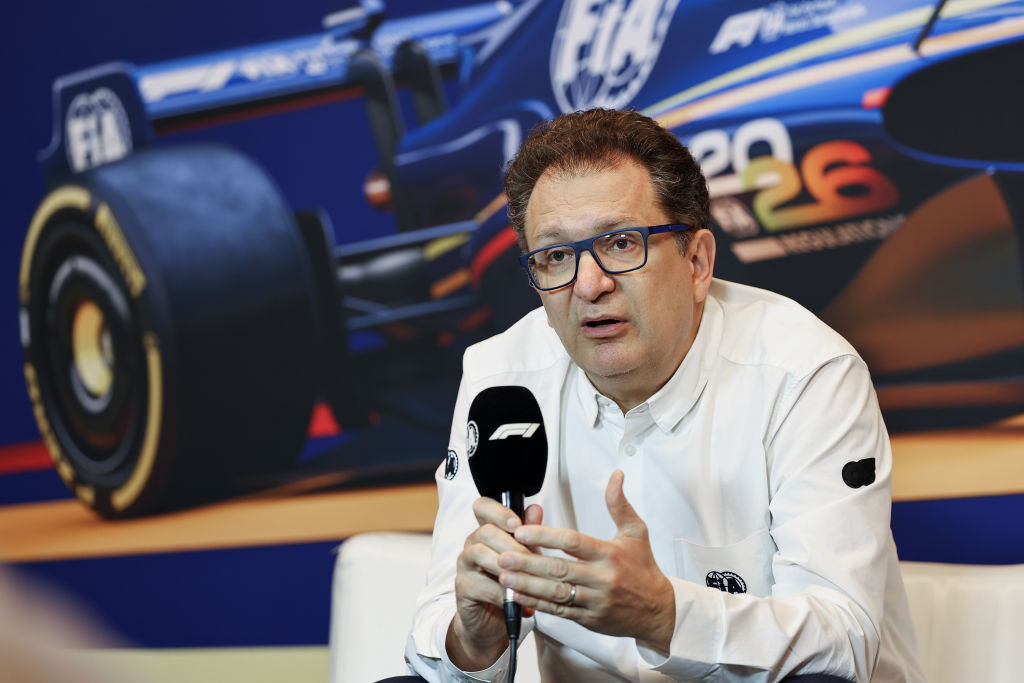
“So it’s an extremely complicated matter, which we have a very good team doing, but it’s just really massively complex and has made the sport a lot more difficult to regulate. But overall I think the bottom line of that, I would certainly say absolutely we cannot imagine not having the financial regulations now, so I think that’s been a success.”

Tombazis says some of the gains from the last ruleset were erased by teams’ aerodynamic developments. Qian Jun/MB Media/Getty Images

Ahead of the introduction of new aerodynamic and power unit regulations, Tombazis says the previous ruleset started from a strong position but evolved in a way that did not allow the FIA to prevent the impact of dirty air becoming problematic again by the end of the cycle.

Advertisement

“The technical side, I think, yes, definitely cars did get to the point where they could race each other more closely,” he said. “I would say where we don’t give ourselves full marks is there were a few… I wouldn’t quite call them loopholes, but there were certainly some areas of the regulations where they were a bit too permissive in some areas, and they enabled teams to adopt solutions which created outwash, dynamically speaking, and therefore went on to compromise some of the very good work on the overtaking.

“So that’s why we saw, [in] the very early days of 2022, everyone was saying how closely they can follow and everyone was really happy, and nowadays it is quite difficult, I would say. So in that respect, I would say we didn’t manage to keep that parameter as well under control as we would have liked.

“In terms of closer racing, I think it is quite objectively achieved, the aim of closer racing in terms of performance gaps. I think we already started with smaller performance gaps from year one of the regulations – if you take first-to-last type statistics – and these have gone on to reduce even more with convergence. So I think that has been a good thing.

“But, as I say, I would have loved it if cars were really able to get into the DRS zone even more easily nowadays, if that worsening of the aerodynamic characteristics hadn’t happened. So I think that’s something we definitely have learned.

“Clearly there were some technical challenges on how stiff the cars are, for example – these sort of parameters. I think there are things that we need to learn from and hopefully make a step forward next year.”