IndyCar 2028: The chassis

Advertisement

RACER’S Marshall Pruett has spent the last year tracking developments with the IndyCar Series’ new chassis, engine, and the rest of what’s on the way for 2028, which we’re presenting in a multi-part feature. Check out the first part here, and look out for additional installments in the coming days.

An important decision was made in October around the next generation of IndyCar chassis, which will arrive in 2028.

Its predecessor was originally dubbed the IR12 (Indy Racing 2012) before company founder Gianpaolo Dallara renamed it the DW12 in honor of its late test driver Dan Wheldon. With the passage of time – 16 years between new models – the upcoming chassis will revert to the old naming standard and be known as the IR28.

GENERAL CONCEPT

“The key objectives in the creation of a new chassis includes interesting styling. It includes increased safety. It includes a couple different ways to further improve the racing, which we thought was great already, but that’s always going to be a priority,” Penske Entertainment/IndyCar CEO Mark Miles told RACER.

“Those really are the key priorities. Obviously, in everything you think about, there’s cost benefit. So the number one priority isn’t to see how inexpensively we can do it, but cost is going to be a consideration as things get developed more narrowly.”

The joint project between Dallara and IndyCar has produced a design that is also meant to feature more power, less weight, and a bigger hybrid.

Renderings of the latest iteration were recently shared with IndyCar team owners and RACER is told images of the IR28 should be revealed in the new year.

Conceptually, the IR28 won’t introduce radical looks or groundbreaking technology to the series. Like the DW12, it’s meant to be strong, durable, and long-lasting. Take the DW12, in essence, and make it better.

WHO’S IN CHARGE OF THE PROJECT?

Four executives have been appointed by Penske Entertainment to lead the new-car initiative, with Miles, Penske Automotive COO Rich Shearing, IndyCar president Doug Boles, and Mark Sibla, IndyCar’s Sr. VP of competition and operations, serving as the oversight quartet. Their boss is also involved in the creative process.

“Many of these decisions will be made by Roger Penske, the owner of the series,” Miles said.

WHO’S DESIGNING THE IR28?

The IR28 has many designers, led by Dallara technical director Aldo Costa, senior program manager Antonio Montenari, head of aerodynamics Dialma Zinelli, senior aerodynamicist Andrea Bongiovani, stylist Andrea Guerri, senior bodywork and interiors designer Roberto Vettori, IndyCar director of aerodynamic development Tino Belli, and styling consultant Chris Beatty, who played a pivotal role in helping former IndyCar president Jay Frye to create the universal aero kit which was applied to the DW12 in 2018.

Once the first “final” version of car was created using computer-aided design, IndyCar inserted the talents of Belli to assist in some redesign work. Responding to the renderings they were shown in late 2024, significant disappointment was shared by a number of team owners who spoke with RACER after getting their first views of the car.

Their feedback inspired IndyCar to rethink the IR28’s visuals and incorporate Beatty – who was not initially involved when Miles was asked in 2024 – into a beautification effort.

Advertisement

Belli, whose vast open-wheel chassis design experience includes some fast and shapely March-Porsches from the CART IndyCar Series era, was a natural choice to task with improving the looks of the IR28 and other design elements that fell within his expertise.

“When it comes to Tino, I think it’s important to note that he really got more involved in three facets,” Sibla told RACER. “One was safety, and by that, I mean a lot of the aero elements related to safety. Dr. (Terry) Trammell had provided a lot of insight as it relates to things such as seat placement, foam, interior, size of cockpit and so forth, but then you think of, how does the car function from a safety perspective in a nose-up position, or those types of scenarios, and how do we improve on that? That was a key area that Tino was focused on. He wanted to see improvement in all of those areas. And we have – some to greater degrees than others – improved over the current car’s performance.

“The second one was the raceability – working closely with Dallara in their driver-in-the-loop simulator that they would load different scenarios with the current car, have that as a baseline, then the IR28, and so forth… he was very, very focused on raceability. Pushing their team, asking all the right questions, and suggesting changes.

Advertisement

“Then the third portion of that was where we started, which is, how do we improve the styling? That’s such a subjective thing, but there are little things you can do, whether it’s the floor of the car and how that looks, and angles on things even such as the engine cover, all these little things that, as you add them up together, you start to say, ‘Wow, OK, that looks a lot more like what we what we want it to look like. It looks a lot more balanced.’

“That’s where he would come in and help. And it’d be a lot of suggestions – they would run them through the wind tunnel, and (he) might come back and say, ‘I know you guys like this, but it causes these three knock-on effects,’ or look at other versions. And we would then choose from there. So I don’t want to diminish his role by saying it was just styling alone. Tino was looking at a multitude of areas.”

NEW OR REMODELED?

IndyCar spent a decent portion of the decade evaluating three directions for its next car. Should it use the DW12 as the base and add some new pieces? Build a new car with as many components carried over from the DW12 as possible? Or go with an all-new car with no links to the DW12?

The answer is the third option, but with a small inclusion of the second.

“I think it is important to start by saying this a new car. It is brand-new,” Sibla said. “There are a few items that will carry over that are, in essence, new items that are being introduced before the 2028 car gets here, but everything else, it’s new. So, uprights, hubs, some suspension components like that will carry over. But mostly outside of the suspension, it’s pretty much an all-new car. I think that’s exciting, because when we talk about safety, it opens you up to the ability to address so many things.”
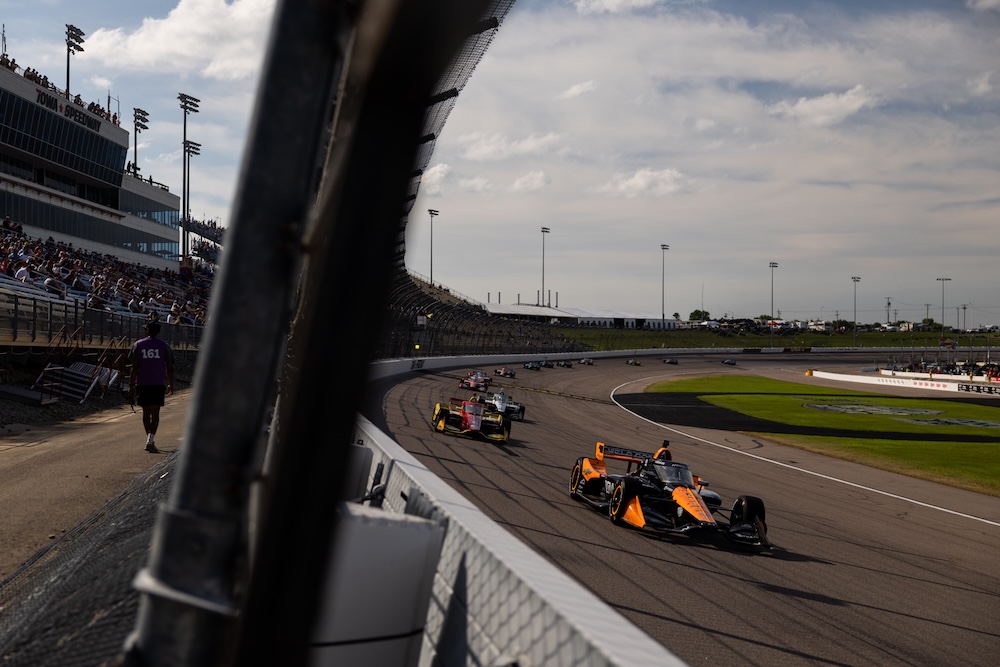
A few components from the current car will carry over to IR28, but the vast majority is a clean-sheet design. Travis Hinkle/Penske Entertainment

THE TUB

Advertisement

“First is safety,” Sibla said. “We all know how important that is. We don’t want anyone to get injured, and we certainly don’t want to lose anybody else. Second is raceability. I think that’s where we feel the IndyCar brand can really shine, as we have some great racing, but there’s still opportunities to improve it in some certain spots. So a lot of work has been done there. And then you look at the performance of the car: How do we increase the performance, while understanding the first two subjects?”

The dimensions of the tub – the safety cell – dictated the length and width of the DW12. In moving on from the Dallara IR07 that ran through 2011, IndyCar wanted to increase the inner dimensions within DW12’s tub to accommodate its growing number of tall drivers, which was led by the late Justin Wilson at 6ft4in.

Enough room was built into the DW12 to prevent long legs from being wedged against the pedals, and in the cockpit, the tub was widened with the intent to allow the Wilsons and Graham Rahals and Ryan Hunter-Reays to turn the steering wheel without jamming their elbows into the cockpit walls. The effort was appreciated, but slightly missed the mark.

As evidenced by the blood seeping through their driving suits, more elbow room was required with the DW12’s replacement. With the IR28, Rahal and others were brought in to assist with the same fitment process, and one the the revised dimensions locked in, the rest of the car was designed.

Advertisement

“I think the one thing that’s important to understand is, we have not changed the wheelbase on the car,” Sibla said of the current regulation that limits the wheelbase between 117.5 and 121.5 inches. “Pick another series that has new cars, like F1. They’ve changed the dimensions of their cars, the total size of their cars, and that’s not something we were wanting to do. Our fans are not going to say, ‘Oh my gosh, this car’s longer. It’s crazy.’ What we’ve done is we’ve looked at how we can optimize the space that we have.

“We ran a few more people through like Graham (Rahal) to get the height. But there’s also the challenge on the opposite end. So somebody that’s short, you have such different body characteristics, and then you have to think about being in an accident, and what does that do to those individuals from the angle of their back to their legs to their elbows? So we did a lot of fitting to understand the proper posture and position from head to toe. And then, how do we make the cockpit wider so that they’ve got more room there? And that has been done.

“The tub is two inches longer, but not all is at the front end, per se. From a visual standpoint, you would certainly not notice the difference.”

Items like the anti-roll bar adjustment handles that drivers push or pull to alter that car’s handling have also undergone a rethink within the tub.

“We’ve looked at some of the controls that are inside that cockpit,” Sibla said. “How do we get some of those levers out and move to more electric actuation and things like that, to make that cockpit safer?”

DIMENSIONS

The DW12 is 40 inches tall, which is fixed, but its length and width change based on the technical packages for the different types of tracks. Viewed from overhead, it fills a rectangular space that’s approximately 200 inches long and 76.5 inches wide. As Sibla explains, the IR28 will live in the same dimensional box.

Advertisement

“It looks a little lower and a little wider, although it really it isn’t any wider,” he said. “The footprint, for lack of a more technical term, is exactly the same, but visually, it has a lower, wider feel. The way the sidepods flow and so forth, you could say it’s more aggressive looking, which is a great way to think about it.”

AEROSCREEN 3.0

Leading into the 2020 season, IndyCar and Red Bull Technologies developed the aeroscreen driver protection device which was made mandatory as a retrofitted item positioned atop the DW12’s cockpit opening. Formed with a titanium halo as the main structural component, it uses a thick laminated screen that wraps around the halo to prevent items from striking a driver’s helmet and upper torso.

In its first guise, the halo, screen, and associated componentry added just over 50 pounds to each car, and with the recent updates made to the second-generation aeroscreen, the weight was brought closer to 50 pounds even.

Amid the many complaints about the aeroscreen’s appearance, there was one saving grace waiting for the future: Whenever the DW12’s replacement was penned, IndyCar and Dallara would have the chance to start with a clean-sheet design, shed the bolt-on look, and properly integrate the aeroscreen into the next tub.

“I would definitely consider it a V3 maybe, almost a V4 or V5 now,” Sibla said. “What it’s done from a safety standpoint has been fantastic, so how do you take those learnings, and how do you improve it visually? That’s what has been done with the new car. I would say it’s lower and wider from a visual standpoint, and it’s integrated into the car. That’s what gives it a much different look and feel.

Advertisement

“I was looking at an image the other day that was a front-on image, and I think that’s where fans talk about it the most. And fans are very important in this process. One of the most important areas from a design standpoint that we talked about is that front-on shot, and that is possibly one of the things that jumps out to me the most, in a positive way, in how that’s changed. And I think also from the side, the way that it’s integrated into the car.

“Also, starting from a clean sheet of paper, they were also able to optimize it to get even more weight out of it. Now, because of 3D printing, there were things they could do to optimize honeycomb structures and so forth. We take that a step further, because now we’re able to design all of it and think of, how do you get a little bit more weight out?

“The uniqueness of that technology is you can reduce weight and, by design, create it to be stronger. It will take a couple of pounds out of it. And that’s a nice place to get weight out of because it’s higher. So the CG (center of gravity) goes down to make everybody happy.”
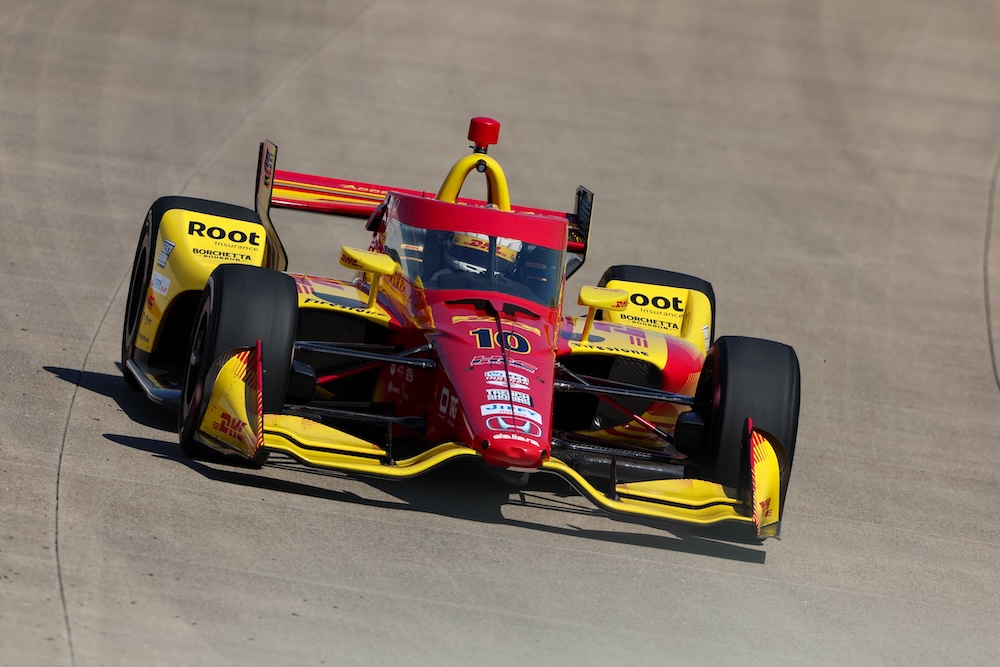
The aeroscreen on the new car will be far more elegantly integrated than its current counterpart. Joe Skibinski/Penske Entertainment

AERODYNAMICS/DOWNFORCE/DRAG

Upon its introduction, the DW12 was listed by Dallara as making a maximum of 4600 lbs of downforce. When the series switched to manufacturer-designed bodywork from 2015-17, the peak number jumped by more than 1000 lbs, and with the new-for-2018 universal aero kit, the maximum returned below 5000 to the 4700-ish lbs available today.
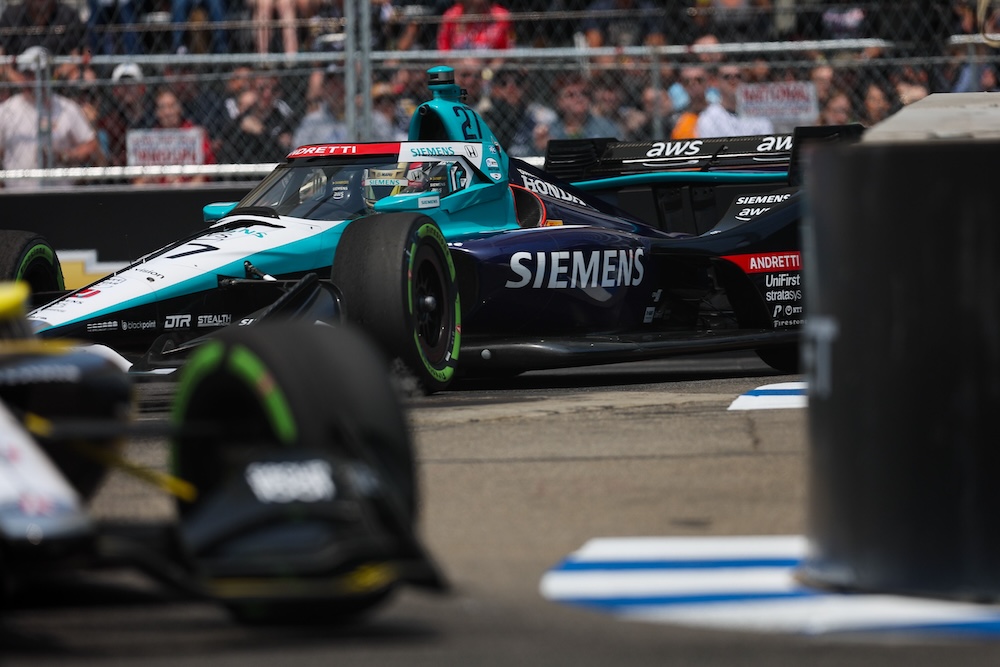
“Pretty similar to what we have now, to be completely candid, so you’re not going to see the high downforce that we had with the manufacturer kits,” Sibla said of the IR28. “Then the next trick becomes getting drag out and so forth, which is relatively similar, and downforce levels are relatively close to where we’re at.”

Advertisement

Aerodynamic work on the IR28 by Dallara, Belli, and others has continued the series’ efforts to improve passing, and especially at the Indy 500, where cars in the middle or back of a pack struggle to overtake each other due to the turbulent – “dirty” – air streaming off of the cars ahead.

“When we get back to that raceability, we talk about understanding, not even the car that’s maybe second in traffic, but let’s talk about the car that’s fifth in traffic,” Sibla said. “And how does the air look, and how does it react, and so forth.

“We’ve also tried to make sure that we have a lot of tools in those areas to be able to work on the raceability, so that teams have a lot of adjustment and tuning options. And that doesn’t necessarily mean more aero parts strapped to the car. It just means the design gives teams the freedom of a wider tuning range. There’ll actually be less aero components on this car, which can also be a benefit for teams.”

Before IndyCar set formal plans in motion to replace the DW12, the series was going to update the car’s superspeedway front wing with a brand-new design that offered a greater range of downforce without creating excessive drag at higher angles. Sibla says IndyCar will hold firm and freeze the DW12’s Indianapolis 500 aero in 2026 and 2027, which also means it won’t bring any of the IR28’s aero forward for the Speedway.

“This truly is a new car, and with that, you don’t have that backwards compatibility from an aero standpoint,” he confirmed. “We’re going to limit any updates or changes because we’ve got two seasons left, and being financially mindful, knowing that this new car is coming and it’s a whole new beast.”

HYBRID INTEGRATION

Advertisement

IndyCar is sticking with the stacked arrangement of the supercapacitor-based energy storage system (ESS) sitting directly above the motor generator unit (MGU) in the bellhousing that covers the clutch and connects the transmission to the internal combustion engine.

But the IR28’s bellhousing is undergoing a change in size from the DW12 to expand up top in order to allow for packing more supercapacitors into the shelf above the MGU. The increase in battery space will, in turn, give the hybrid a bigger energy bank to deliver longer and larger bursts of power.

WEIGHT

The IR28 is meant to weigh somewhere between 80-100 lbs less than the current car. If the ambitious target is hit, it will be a major achievement by Dallara, and like the IR28, the DW12 was subject to similar weight loss ambitions when it was announced back in 2010.

In 2025, the DW12 started road and street course races at a minimum of 1785 lbs, which rests at the highest recorded weight for an IndyCar in at least a half century. (Minimum weight is measured without the driver, and minus fuel, which is just over 120 pounds for a full 18.5-gallon load.) With a driver in the 150lb range installed and a full tank to draw from, the hybrid DW12 tips the scales at over 2000 lbs.

The DW12 made its first racing appearance at St. Petersburg in 2012 with a minimum weight of 1565 lbs, or 220 less than it sits today. On debut, the DW12 was in line with its predecessors that weighed around 1500 lbs throughout the 1980s, 1990s and 2000s.

Advertisement

Concepts for the DW12 were aggressive at the time as the original minimum weight target was announced as 1380 lbs, which was ultimately missed by a remarkable 185 lbs. The ultra-lightweight DW12 was meant to give the car exceptional speed without the need for a big and angry engine. At 1380 lbs, the DW12’s power-to-weight ratio would have been incredible, but the optimistic drop in poundage wasn’t delivered and it embarked on its journey back in 2012 at the 1565-lb starting point.

Within the first few years of the DW12’s service, an array of safety-related updates were made after big crashes compromised the tub. As each incident exposed a weakness, Dallara and IndyCar reacted by updating the car with more anti-intrusion paneling on the sides of the cockpit, strengthening the ring that forms the opening of the cockpit, and any other additions that were deemed necessary.  

Those updates came with more weight, and once the aeroscreen (2020) and the hybrid system (2024) were brought into the formula, the escalation from 1565 lbs to 1785 was complete.

Taking the IR28’s minimum weight down to 1685-1705 lbs will happen if all of the contributing areas like the tub, aeroscreen, ESS, and transmission meet their lightweighting figures.

“There is some that comes out of the tub,” Sibla said. “It’s not crazy amounts, but what you find through this process is everything’s of value, and it’s additive quickly. So the tub has some weight reduction, bodywork overall, including the underwing, there’s a portion of the reduction there. And there’s also a portion of the reduction through the rear suspension and some work there. So it’s a combination of things that add up.

Advertisement

“The gearbox, if you did a pie chart, that would be your largest sliver. But then it’s a multitude of these things that start to start to add up and bring that down. There is a chance, depending on the hybrid solution that’s chosen, that it would be lighter than our current solution. But the (80-100-lb) number that we have now is separate from the hybrid, so that’s not included in any projections there. That number is inclusive of the gearbox, the bodywork, suspension, things like that.”

Separate from the performance benefits, there’s a second reason to carve weight from the IR28.

“Weight is also a factor in safety, because you want to get that mass down,” Sibla said. “There’s a lot of energy in an impact, so the less mass, the better. But we aren’t lowering our standards for safety or crash testing. The criteria that we made Dallara designed to was whichever was higher, either an FIA regulation or a regulation that IndyCar has. So it had to be the highest of whichever those were.”

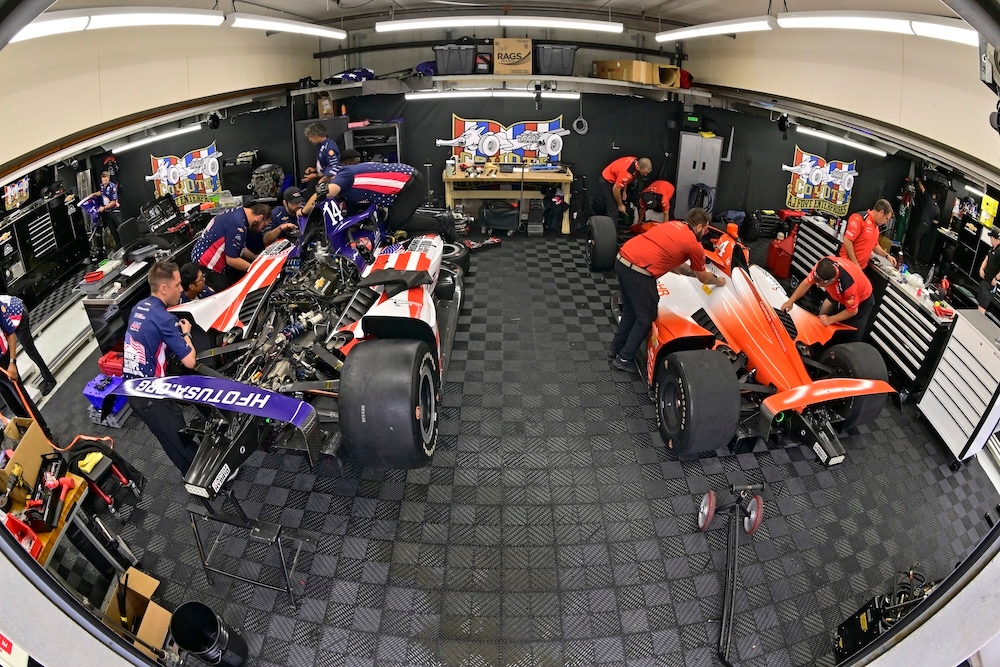
A current-spec IndyCar carrying a driver and a full tank of fuel weighs in at around 2,000 lbs, but the series aims to skim up to 100lb off that for the new car. Chris Owens/Penske Entertainment

TRANSMISSION

The specialist firm Xtrac has supplied IndyCar’s transmission needs for many decades, and it continues with the IR28. Xtrac’s involvement was never seriously questioned, but the product it would deliver was the subject of an impassioned debate between the series and its teams.

The topic of whether the new car should use the DW12’s venerable and highly reliable Xtrac P1389 model, or come fitted with a brand-new design, was among the more interesting developments late in 2024 and into 2025.

Costs were at the heart of the argument to carry the P1389 over to the IR28, as teams have massive inventories of complete transmissions, countless sets of gears, and weren’t keen on the idea of replacing everything. But at the same time, many owners were pushing the series to shed a vast amount of weight with the new car, which created dueling opinions on what the new car should carry.

Advertisement

At one point, a lightweight, slimline 7-speed appeared to be the winning idea, but the expense involved with making a small gearbox that could withstand more horsepower and more instant torque from the hybrid tempered enthusiasm for the concept.

And that’s where the ultimate decision was made for Xtrac to create an all-new 6-speed gearbox, the P1439, that is lighter than the DW12’s, but doesn’t wander into exotic concepts or costs.

“Regardless of anything you look at, we always try to look at what’s the cost per pound to reduce,” Sibla said. “There’s some really crazy composites out there that could get a little bit more weight out, but they’re ridiculously expensive. We’re going to move forward with a new gearbox, because the amount of weight that can be reduced from it is significant in the grand scheme of things.

“So right now, the projection is between 20 to 25 lbs that we can get out of that unit, which is a substantial amount. And so certainly that’s an opportunity we want to take advantage of, and it will remain a six-speed, making sure that it’s designed to handle increased power levels.”

Sibla reiterated IndyCar’s mindfulness of the costs involved for teams as they amass all-new transmission inventories that are specific to the IR28.

Advertisement

“We understand all of that can get very expensive,” he said. “This is a change. I think one thing is letting people know of a change ahead of time. I never want us giving a decision – unless it’s completely safety-related – or change something in less than a year, where you have no chance to get your inventory up and prepare accordingly. Some of the things in a gearbox are certainly consumables, so now they know the timing, they can cut orders down as this one is phased out. But there’s too much weight that can be reduced there to not move forward with a new design.”

SUSPENSION

‘Conventional’ is the best word to describe Dallara’s front suspension design for the IR28. Like the DW12, it will have a double A-arm layout with pushrod-actuated rockers that connect to traditional coilover shocks, a third spring/damper, and anti-roll bar.

The rear of the IR28 could also feature the same layout and components, but Sibla says some unspecified changes could be on the way.

“That’s actually something we’re still working through a bit,” Sibla confirmed. “There’s a few options in the rear. The front, I would say, would be pretty similar to what we have now, but at the rear there’s some things that could be optimized, maybe cleaned up a little bit. So that’s an active discussion as we speak.”

DAMPERS

Call them dampers, call them shocks, and with the IR28, we’ll probably call them spec. To a degree.

The rules today for the DW12 are simple: “Damper vendors unrestricted; use of inerters within the damper housing permitted.”

Just about every other area of the car was subject to homologation back in 2012, meaning the DW12 had strict rules that prevented teams from making their own A-arms, wings, and whatever else was previously open for individual interpretation.

Advertisement

But dampers, which have a critical role in tuning the handling of a car to the driver’s preferences, were left relatively free for creative development. As the DW12 got older, and as teams found almost every way to generate speed from the same car, more money was poured into damper development – the lone performance component left to play with – and annual budgets started to swell.

It’s not uncommon for a three-car team to spend millions of dollars per season on damper programs, and with increasing cost-related complaints being shared by team owners with the series, IndyCar is looking to reduce the freedoms around dampers for the IR28. Inerters, in particular, are often cited as a large contributor to development costs, and are up for being banned.

To start, IndyCar won’t follow what’s been done in stock car racing where technical inspectors hand teams sealed dampers to install on their cars. It won’t be a one-damper-fits-all approach, but rather, a reduced set of internal damper build items that are tailored for the array of tracks found on the IndyCar calendar. In a general sense, if teams had 100 items in the box to choose from with the DW12, the IR28’s damper box will be much smaller. But how small is undetermined.

The series recently tested two spec damper options at the Indianapolis Motor Speedway, and afterwards, Sibla went into detail about the thought process behind the likely change.

“It’s clearly a very expensive area,” he said. “It’s also an area of differentiation that teams are using to compete against each other. So the first thing was, is this an area where you move into a spec product, and instantly, you not only save money, but how drastic is the feel? And there was some really good feedback from the test; this was a great place to have the first test.

Advertisement

“And if we go in the direction of a spec unit, the amount of settings and changes even within that realm are still immense. It’s not just, ‘Hey, here’s your sealed unit for St. Pete. Here’s your sealed unit for Phoenix.’ It would just be, ‘Here are the multitude of changes that you can make to this particular unit.’ So more to come on this, but it was a good first step.”

Dampers are IndyCar’s great differentiator (apart from the drivers). But probably not for much longer. Walt Kuhn/Penske Entertainment

BRAKES

Along with the different dampers IndyCar has in mind for 2028, the series is working on a change to its braking package supplied by Performance Friction Corporation, albeit on a shorter timeline. With the inclusion of hybridization and the braking assistance the MGU provides to the rear axle during energy harvesting, the series has asked PFC to develop a new and smaller rear brake caliper because the hybrid now helps with the slowing process.

The DW12 has used the same large six-piston calipers front and rear, and with the update in motion for 2026 – possibly just on the ovals – the new rears would shift to a smaller six-piston monoblock design that also pares a small amount of weight from the car.

For the IR28, an all-new braking package, possibly with four-piston rear calipers, could get the nod.

“We have some additional meetings between ourselves and PFC and Dallara on this topic, because we want to be mindful of opportunities we have to improve,” Sibla said. “It would still be a six-pot on the back, but it would be a change in sizing. There’s also the potential to look other options in the future, but this is where we have to be intelligent about saying, ‘OK, let’s not introduce something and have to quickly replace it.’

Advertisement

“So that’s where we’re looking at, is this a potential carryover component? And if not, then what’s the best way to introduce the future component? I would say clarification on that decision will be soon; hopefully before we leave for the holidays. And yes, one of the future considerations and suggestions is a four-pot.”

WHEELS

IndyCar sought proposals from vendors to manufacture brand-new wheels for 2027 with the DW12 that will carry over to the IR28, and while O.Z. was believed to have gotten the nod, RACER understands BBS will be the sole supplier. The final answer is subject to confirmation by IndyCar.

The new wheels are identical in width and diameter to today’s wheels, but will be made from aluminum instead of magnesium, and delete the aerodynamic lip – the aeroflange on the outer face – that smooths airflow over the wheels, which has broken into shards in some crashes.

The forged aluminum wheels come with a claim of being able to last seven years and to match the weight of the magnesium wheels they’ll replace.

“Wheels will be introduced in ‘27 and it’s the same size, so none of that changes,” Sibla said. “What does change is we have made sure that Firestone and the sensor manufacturers and PFC are involved with those discussions, so that the wheel is optimized for those parties as well. It’s been a long time since we’ve had new wheels in the sport. So how do we optimize for brake cooling? How do we optimize for reducing tire slip? How do we optimize for the new tire pressure sensors that exist out there that can tell the temperature of the tires from an internal standpoint? How do we also optimize from a wheel weight situation?”

Advertisement

The aeroflange… we are getting rid of that for a number of reasons, mostly driven by safety, but you are getting rid of some mass when you get rid of that. Magnesium is obviously a little lighter. But then also looking at the dollars and cents, it’s more expensive. So it made sense to go the route of aluminum. We felt that it could be optimized enough – we’d seen enough data, we’d seen enough history, and (seen it) used in other series.”

POWER STEERING

The IR28 will maintain IndyCar’s unbroken streak of racing without power steering, which is unique to the series compared to F1, IMSA, and NASCAR.

ELECTRONICS

Cosworth has been IndyCar’s sole supplier for the onboard data systems and steering wheel displays. McLaren has supplied the spec ECU, and other vendors have handled power distribution units and interrelated components.

It wouldn’t be a surprise to see many of the longstanding vendors like Cosworth and McLaren continue with the IR28, but Sibla wasn’t prepared to identify specific suppliers for the car’s array of electronic needs.

“We have a variety of systems on the car, so one group is not going to own all the systems,” he said.

Returning to the topic of removing anti-roll bar adjustment levers and other protruding items in the cockpit, Sibla says the IR28’s steering wheel could become the home for making handling changes on the fly.

“We’re trying to get any of those levers that are in the cockpit out, and move those to primarily on the wheel. So wheel-operated, electric anti-roll bar adjustments,” he said.  “But we had our driver meeting, and one of the things we want to be cognizant of is, is there a point where you get too much on the wheel? And what do we need to be thoughtful of there? So we’re still looking at it, and brake bias adjustments, too, being on the wheel.”

DRS

Formula 1’s drag-reduction system was contemplated for the IR28, but didn’t make the cut.

Advertisement

We’ve looked at the ability for a driver to adjust aero and it hasn’t come back to be as effective as we had thought it would be, and that’s one of those things that you learn,” Sibla said.

COST

Teams surveyed anticipate a cost of $800,000 to $1 million per chassis. The series has told its owners it will look to match the current pricing for new Dallara DW12s, which most of the owners place in the aforementioned range.