Off-Road Racing 2025: Candy canes and lumps of coal

Advertisement

For most, this time of year carries with it the ability to allow all of us some down time for reflection on what blessings, and challenges, the past 12 months have gifted us. For now, the collective racing world is paused as well, and the off-road world is no exception.

As a whole, 2025 represented another solid year in the dirt. While the sport can still be shackled with the same narrow-minded limitations that have been there from the outset, for the most part fans, racers and teams can be thankful off-road racing is enjoying a steady climb into acceptance by the motorsports mainstream.

Here is my celebration of the year’s best and worst with candy canes and lumps of coal.

Candy Canes

Kyle Chaney’s win at KOH

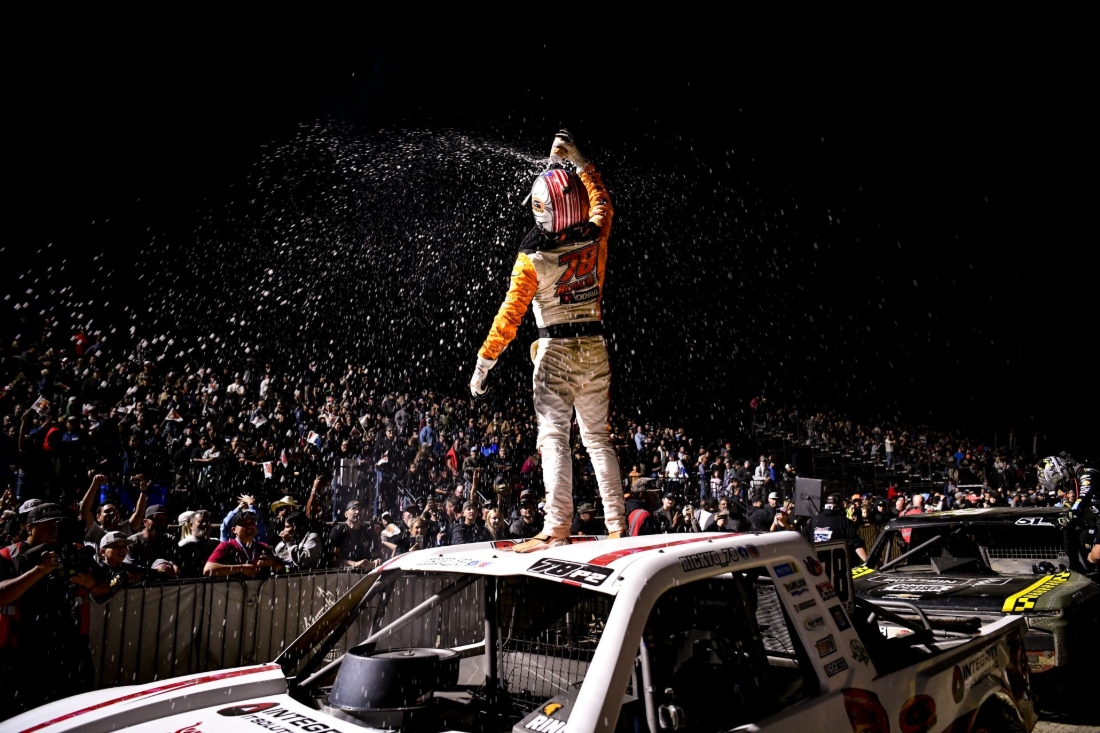
After several knocks on the door, the unthinkable happened early in 2025 as gifted racer Kyle Cheney had the audacity to win the premiere King of the Hammers “Race of Kings” in a Can-Am UTV (pictured above).

Yes, Cheney’s machine was not a true production unit, but instead a purpose-built chassis utilizing Can-Am components and drivetrain – along with 37-inch tall Maxxis tires – to make the impossible possible. The desert and short-course veteran driver came close in 2024, but

The achievement stands at the very precipice of where desert racing now also stands. With Polaris making moves to eventually take an overall outright victory in Baja, the entire sport may be shifting away from the heavier, more expensive and much more powerful all-wheel-drive Trophy Trucks and 4400 Unlimited machines that have dominated for two decades.

Chaney’s is one of the sport’s best and brightest, and many were happy to see the amiable Ohio resident make history. For purists like King of the Hammers founder Dave Cole, however, the victory certainly makes the future direction of UItra4-style racing far cloudier.

Unification via the American Off-Road Racing Championship

For the health of American desert racing, it had to come down to this at some point.

The battle for supremacy, and, more importantly, racer participation, had been a bloody one in which none of the main desert series promoters was gaining ground. Simply put, there were too many U.S. races with too many conflicting dates for too small of a customer base.

Rather than continue the race to the bottom, Best in the Desert (BITD) and Unlimited Off-Road Racing (UNLTD) joined forces to create the unified American Off-Road Racing Championship. It was not a business merger, but rather the two groups taking their collective schedules and merging them into one much more attractive choice and a single series.

The merger between the two desert racing organizations is designed to unify the sport, streamline competition and deliver more value to racers, sponsors and fans, according to series officials. The 2026 schedule includes the Parker 400 in Parker, Ariz., Jan. 21-25, a historic season opener known for its challenging terrain along the Colorado River. The five-race season will conclude in October with the Laughlin Desert Classic in Laughlin, Nev. In between will be each organizations marque races – the Mint 400 in Las Vegas and the trans-Nevada Vegas to Reno.

While it all looks good on paper questions remain about the Folks family (BITD) and the Martelli brothers (UNLTD) ability to share power and stay united. For the good of the sport, let’s hope so.

Advertisement

Champ Off Road expansion – again

Another second consecutive year on the “nice” list belongs to the Amsoil Champ Off-Road series thanks to their steadfast commitment to expanding their Midwest-centric schedule. Despite some naysayers that opposed the 2025 plans, Champ’s management team moved forward in bringing top shelf short course off road racing to Missouri and California.

The two additional races bracketed the traditional summer tour in Minnesota, Michigan and Wisconsin. Racers enjoyed a return to the challenging (and purpose-built) track at Lucas Oil Speedway in Wheatland, Mo., overcoming petty politics of two oil companies not working together to make it finally happen. For many, the fact that longtime off-road racing support Forest Lucas was able to see the sport’s best return to his crown jewel before his passing made it all worthwhile.

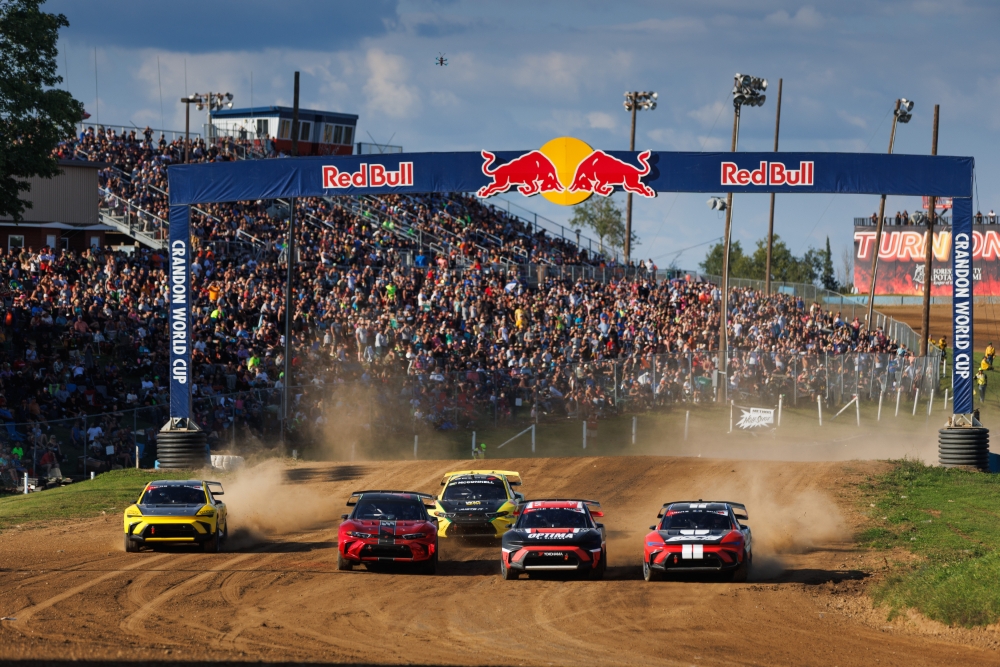
The series finale for the pro classes took place at California’s Glen Helen Raceway. For an off-road hot spot starved of top short course racing for several years, news of Champ’s season-ender taking place in their backyards was more than welcome. To their credit, Champ did their research and held the event on Friday and Saturday night under the lights, a schedule always more popular in the region. The result was two nights of great racing and even better attendance.

Factory Polaris team – again

For very good reason, the folks behind the factory Polaris/SCI Motorsports desert racing effort have made the candy cane list for a second consecutive year.

It’s all about excellence.

Advertisement

Once again led in large measure by phenom Brock Heger, Polaris RZR factory racing posted the most dominant season in UTV off-road racing history, taking the overall UTV title in every major race they entered this year. That list includes Heger’s domination of the Dakar Rally SSV category, winning 10 straight stages en route to a two-hour class victory. Then came his win of the Desert Challenge and UTV Hammers Championship at King of the Hammers, followed by a win at the Mint 400, SCORE San Felipe 250, SCORE Baja 500 and SCORE Baja 400.

Mitch Guthrie Jr. took Polaris to the overall UTV crown at the Vegas to Reno marathon before Caden MacCachren (son of Rob MacCachren) and Ethan Groom capped off the year with the top spot at the SCORE Baja 1000.

Polaris Factory Race Car

Determined to raise the performance spectrum of side-x-sides in the overall off-road racing genre, Polaris executed a virtual clinic on how to perfect the racing of its products on an international stage. It also made that technology available to privateer racers everywhere via the sales of all 30 its all-conquering Polaris RZR Pro R factory. These machines are built at the Polaris factory and are essentially exact copies of the cars campaigned by the SCI Motorsports team.

While 2026 will mirror last season’s events and locations, for now stability is also key. But, like last year, the remaining wish is for the overwhelming number of UTV and youth classes to be condensed to allow more track time, less confusion for fans and shorter schedules on race weekends.

A Rebirth of RallyX

The trials and tribulations of establishing European-style rallycross in the Unites States is a well-documented roller coaster ride – one comprised of excitement, promise, heavy investment before a final plunge back to reality.

Advertisement

None of this is lost on longtime Swedish rallycross empresario Andreas Eriksson, who has been steadfast on his quest to bring the sport to North America. With the untimely demise of the Nitrocross series firmly in the rearview mirror, at the invitation of Crandon International Raceway Eriksson, his family and some key staff brought a handful of their 1000+ hp electric FC1 cars to Labor Day weekend’s massive Polaris Crandon World Championship/Red Bull Cup weekend.

RallyX Demo Race at Crandon. Jason Zindroski photo

It was far more than a one-time exhibition but instead represented a much-needed opportunity to see how this type of rallycross format would work as part of an existing event. Instead of following the often-failed business model requiring a massive infrastructure investment to create, Eriksson and company went the opposite way.

The effort bore fruit at the recent Performance Racing Industry show in Indianapolis. Joined by noted automotive aftermarket entrepreneur Kirk Miller, Eriksson unveiled a new RallyX America’s series that includes appearances at Crandon’s Brush Run weekend (June 20-21), then on the hallowed dirt of Eldora Speedway (June 27-28) before heading north to Canada’s Trois-Rivieres (Aug. 22-23). There is even a Rallycross “All-Star” FC1 category race scheduled for Sept. 6 back at Crandon’s Red Bull World Cup Sunday (part of the Polaris World Championship weekend).

We gift Eriksson and company a handful of “Polkagrisar” (Swedish for candy cane).

Lumps of Coal

Champ and Champ

What?

While the Amsoil Championship Off-Road (COR) series is making strides and offering stability for the short-course world, it has struggled for more widespread name recognition along the lines of what its predecessor The Off-Road Championship (TORC) enjoyed from the onset. Like so many forms of racing, it is a huge tentpole event like the Polaris Crandon World Championships/Red Bull Cup that get the attention.

But now a new group based in the southwest have rekindled another, smaller short-course series rekindling the “Championship Off-Road Racing” (CORR) name made famous by Marty Reid and then Jim Baldwin.

Champ at Glen Helen

Advertisement

One can make an argument that ISOC, owner of the COR series, should have just taken over the CORR name – which to many represents the pinnacle times for short-course off-road racing history. Sadly, they didn’t. Now there are two short-course series with nearly the same name both vying for racers, sponsors, broadcasting and all the rest.

A good friend of mine once described off-road racing as being run by “myopic warlord that can’t get out of their own way.” This new Champ versus Champ deal only make his point stronger.

Trophies for everyone

My final thoughts as we depart 2025 is relevant to every form of off-road racing minus outliers like the Dakar or Rebelle rallies.

This sport can only survive in its present state with entry fees paid by racers. The goal of every sanctioning body is to attract the most amount of people willing to pay that entry fee. To do so the approach has been to create more and more and more classes. Today’s NORRA or SCORE or Champ entry list or results posting is proof of how far, or low, we have come.

For desert racing, it can mean pointless competition racing against a few other competitors – if any at all. Social media posts of teams touting they “won” a Baja 1000 when they were the only ones in the class. In short course, it means long days, highly diluted purse awards and a confused schedule for fans to understand. Do we really need six or eight youth classes?

It also goes back to promoters and sanctioning groups only interested in dealing with today’s bottom line, not forging a more solid path to the future by eliminating classes over a longer period – or even taking a more formal stance on rules and their enforcement.

This approach isn’t going to serve the long game.

Advertisement

Just ask any kid playing sports today. Trophies for everyone means winning for no one.