Which NASCAR drivers have benefited – or suffered – the most since the Next Gen car arrived?

Advertisement

NASCAR’s introduction of its seventh-generation race car in 2022, dubbed Next Gen, brought about one of the most radical changes in the sport’s history.

The car was nothing like any stock car the drivers had driven before, aside from it having a steering wheel and four tires. A symmetrical car emphasized mechanical grip, and removed the skew and right-side side force. In doing so, it took away a driver’s ability to drive the car off the right-rear tire – a skill some had specialized in.

The specifics of the car included it being higher off the ground, a new splitter, a flat underbody, a rear diffuser (teaching everyone what that word was), a shorter rear deck, a lower roof and wider dimensions. There was also the move to a sequential five-speed shifter from the traditional H-pattern, and the arrival of independent rear suspension. The list goes on.

And speaking of things being wider, the series moved away from five lug nuts to a single center-locking lug nut. In doing so, Goodyear built an 18-inch tire that went from 10 to 12 inches wide.

So the changes were widespread, and brought new challenges to teams and drivers. One of the most notable variables that came with the car was that it required drivers to adapt to driving a bit differently.

The car has now completed its fifth season in competition, so RACER asked 22 different Cup Series drivers the same question: which drivers have benefited the most from having to adapt to driving the Next Gen car, and who has it hindered the most?

All of the drivers who were asked have driven both a previous-generation Cup Series race car and the Next Gen car.

Bubba Wallace: I don’t know. I would look at (it) more organization-wise or manufacturer-wise. The Fords got it figured out at short tracks; no one wants a Team Penske car in the final four. But then you go to mile-and-a-halfs and it’s us (23XI Racing) or Hendrick for the Chevys. So, I think it’s more manufacturer-based than driver-based. Obviously, you look at Denny [Hamlin] and [Kyle] Larson, you could throw another couple of names in the hat, but I think it’s more that body build stuff that we can capitalize on. At the end of the day, it’s somewhat of a kit car and can make some improvements throughout the year, but it’s kind of the DNA that’s been embedded when you go to different types of tracks; you’ll see some manufacturers shine more than others.

Advertisement

Kyle Busch: Who has it benefited the most? I think that’s hard to say. It’s not all driver. It’s the crew chief, engineering, the shop. It’s everything. But I would say [Ryan] Blaney, [William] Bryon, those guys have probably benefited the most. The ones I would say it hasn’t really changed a whole lot for, they’re still just as successful as they were before, would be Denny, Christopher [Bell]. And the ones you would say arguably have hurt the most have been me. I would say practice is probably a key to that. If you look back to my last year with Adam [Stevens, at Joe Gibbs Racing], we didn’t have practice; it was COVID time. So, we had zero practice, lined up and raced, and we only won one race in the era. It was coming from the shop and being (good) right out of the gate. It’s the same thing as today, as we were fighting then: we weren’t good until the final stage of the race. Texas might be the lone race to that where we won. We were good all day.

Busch won one race in the first year of Next Gen racing, which came at the Bristol dirt race when the leaders wrecked in front of him on the final lap.

Michael McDowell: I think it’s helped me the most, and it’s hurt Kyle Busch the most. The one that probably impressed me the most was Martin Truex Jr., because if you remember that first year or year and a half was a real struggle, I feel like. Then he figured it out and started getting back to winning and doing his thing. I’m sure a lot of that is about the team and the car, and how things ebb and flow. But I feel like that first year, he was one of those guys who kind of suffered and then figured it out.

Advertisement

Austin Dillon: I don’t know who it’s helped the most. I think it comes and goes as OEMs come and go, and certain drivers are probably affected by that more than just one guy figuring it out. But you see consistency from certain organizations that have been really good. You see ups and downs from certain organizations. So, I wouldn’t be able to really pinpoint a driver who has really benefited. Michael McDowell is pretty good in this car. He changed a lot in these cars. AJ (Allmendinger) is pretty solid, too. The guys who have driven things with independent suspension have probably jumped up there a little bit.
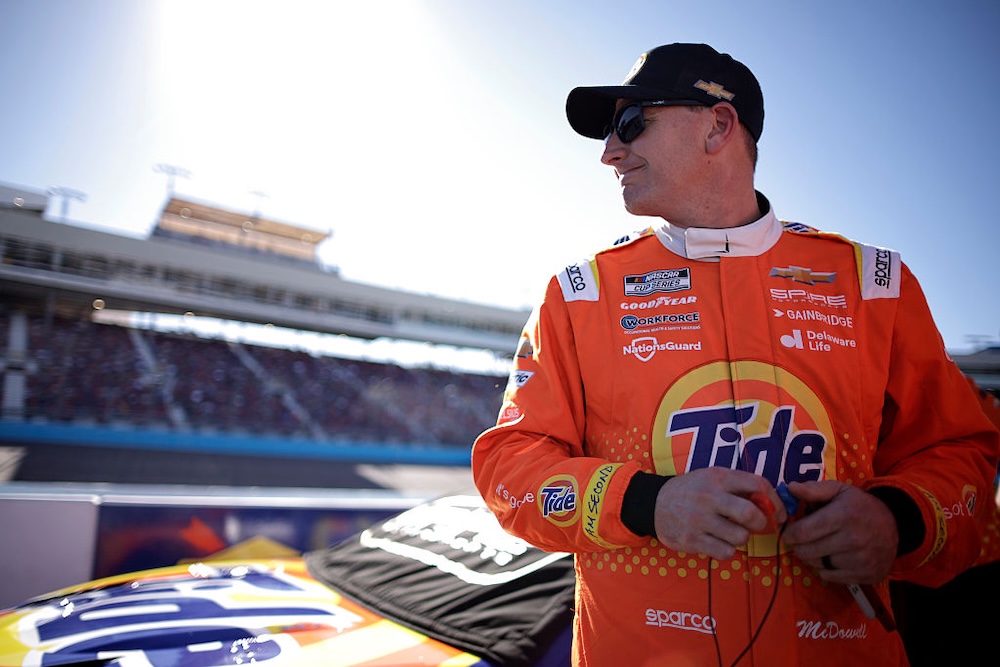
McDowell has found plenty of opportunities to shine since the arrival of the Next Gen era. Sean Gardner/Getty Images

McDowell has won once in the Next Gen car, which came at the Indianapolis road course in 2023. However, the last four seasons with the car have produced some of the best results of McDowell’s career, including single-season highs in top-10 finishes and laps led. Allmendinger also has won one in the current car, at the 2023 race at the Charlotte Roval.

Denny Hamlin: I don’t know. It’s tough because Kyle… obviously, if you look at incidents and self-spins, I think Kyle probably leads that category. So, you’d certainly think he’s had the toughest time adapting to the car. Who has it helped? Gosh, I don’t know. It’s such a tough question. Maybe Ryan Blaney. It seems like they’ve gotten faster over time and are faster now in the Next Gen era than they were. But that could be experience or a list of other things.

Advertisement

Christopher Bell: Are you taking a poll right now? I bet I’m pretty high on that list, right, as to who it benefits? That is great news [ED: After being told his name hadn’t come up at the time he was asked]. I think the timing with me coming into the Cup Series in 2020 and having no practice and no qualifying, I don’t think my rise was due to the Next Gen car. With that being said, you have to take into account when people came into the Cup Series a little bit with that. Certainly, the veteran guys, Kyle Busch, would be the one who stands out as having taken a hit, and I don’t know why that is. While it is different, the acclimation period was the same for everyone, and Kyle might joke about him not being able to drive the car or figure it out, but I don’t think that’s really true. I don’t know. Kyle would be the obvious answer for taking the negative impact, but I don’t think it’s all on Kyle.

Kyle Larson: The easy answer is to say it’s hurt Kyle Busch the most, but he’s gone to another team since then. I guess he got the one year at Gibbs, but I would say it’s hurt him the worst. I would say it’s benefited a William Byron, a Ryan Blaney, for sure and again, all that could be circumstantial. But it is a little bit different driving technique. But it’s still a race car, and it’s still a stock car on a pavement track where your equipment has to be good.

Advertisement

Ryan Blaney: Oh. I really don’t know. I feel like the best guys can adapt to anything. We’re kind of used to adapting to things. I will say the Next Gen was the biggest change that I’ve ever been a part of. I remember in 2022 when they rolled it out, everybody was all over the place because you were trying to find the limit, and there wasn’t a ton of testing in the winter. I remember for the first two
months, you’d have more wrecks in practice than ever before; everyone was trying to find the line, and you couldn’t push the car as hard as you normally could, as far as sliding it around. I don’t know.

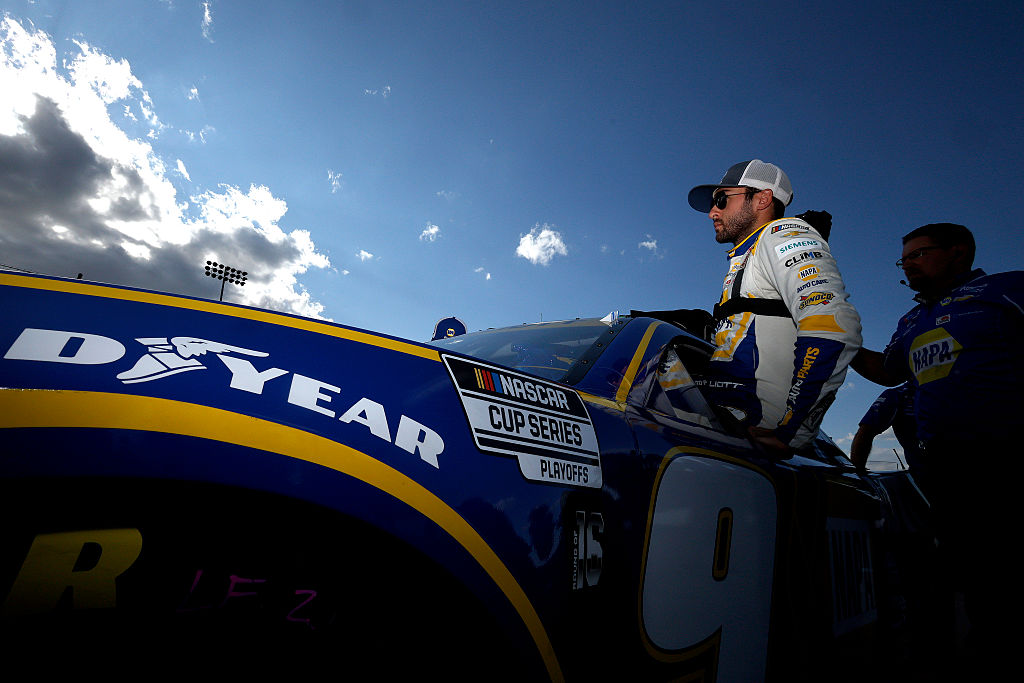
I think that’s a good question. I don’t know who it’s helped or hurt. I’d say it hurt everybody for the first little bit, and then as everyone has gotten used to it, I don’t know. I definitely feel like it hurt, initially, and a bit longer than I thought it would, Chase Elliott. He was really good in that old car, and then I think this one took him a bit to get used to in how he drove the race car. But he’s coming around to what it needs to be and has been good. I’d say that one.

Advertisement

Alex Bowman: Gosh, who has it helped? You look at William (Byron). He adapted to this car really fast and has been super successful in it. I would say that’s top of my list. His driving style suits this car really well. And I don’t know. I feel the opposite in a sense. I feel like it’s hurt me not being able to drive off the right rear tire as much as I did with the old car. You can’t really do that with this car. I think there are a couple of guys it’s hurt, for sure, and some guys that it’s helped. But at the end of the day, it’s our jobs to adapt to it and try to be the best we can with it.

William Byron: That’s a loaded question. I don’t know how I want to answer. It may have helped certain older drivers who had to adapt to it a lot more. But man, this car has been around for a while. It’s nothing new. I felt like the first year was maybe a big learning curve for all of us, and I felt like I adapted to it the worst during testing at times, and then I committed to it. I think it has a lot to do with the team. I think it has a lot to do with the chemistry there and the balance you’re looking to achieve. Now we’re in the second phase of the car and trying to fine-tune what your balance needs to be, what you want out of it.

Byron came into the Cup Series in 2018 and drove the sixth-generation car for four seasons with two wins. In the current car, Byron has won 14 times and has never finished worse than sixth in points. Blaney has 10 wins in the current car, a championship (2023), and has never finished worse than eighth in the standings.

Advertisement

Chase Elliott: That’s a good question. It’s tough. I feel like it’s probably unfair to pick people who have benefited, because who’s to say those guys wouldn’t have adapted and become successful in the other car that might not have necessarily had as much success before. I look at William, and I think that’s unfair to say about him because he was still pretty fresh in his career. He’s obviously had a lot of success in this car, but I think he was on track to have that success anyway. So, by the numbers, it points toward him, but I don’t like that. As far as who it’s hurt the most, I don’t know. I’ve struggled. I would put myself as someone who has struggled with it as much as anybody. But it’s a work in progress.

Driver who wished to remain anonymous: I think Ross [Chastain] has benefited a lot, it seems like. Who hasn’t it benefited? Maybe Chase Elliott.

Ross Chastain: I think lining up with Trackhouse at the right time, it’s kind of hard to say for me, but selfishly, I’d say it’s helped me the most. I was never going to make up what I didn’t know about Gen 6, although I had it in Trucks and Xfinity. There were so many different flavors of the aero balance and the way those cars drove that I don’t know if I would have ever caught up. Guys would have aged out, and I feel like I would have cycled up later in my career. But Gen 7 gave me a fresh start, and through the testing window ahead of 2022, we found some stuff and have tried to keep up. We’re not as fast as consistently (as we were). But I think Gen 7 helped me the most.

Chase Elliott admits that he’s found the Next Gen car to be a challenge: “I’ve struggled with it as much as anybody.” Sean Gardner/Getty Images

Advertisement

Elliott was one of the most consistent drivers in the first few years of his career in the sixth-generation car, and particularly strong on road courses. He had 13 wins overall, a championship, and six straight seasons finishing inside the top 10 in points.

Chastain was signed by Trackhouse Racing in 2022, the first year of the new car. It came after his season with Chip Ganassi Racing and continued to give Chastain the best opportunity he’d had in the Cup Series. Over the last four seasons, Chastain has won six times.

Daniel Suarez: We thought five years ago that, OK, everyone is going to be the same and the older drivers are going to adapt, and the younger drivers struggle. The reality is that the good ones always go to the top. The good teams always go to the top.

Advertisement

John Hunter Nemechek: I’m not going to throw names out there, but it has a little bit of a different driving style, for sure. When you look at some of the guys that were running two or three series a weekend and they were similar cars, those guys were very, very good  and they knew the feedback to give, the feel they needed, and exactly what adjustments did what, and how to fine-tune their cars through practice. With this car only having 20 minutes when you show up… it’s hard. Talking to Matt Kenseth, he was very good at being able to dial his car in during practice, and they were really good at that. Now, you don’t have that option. So, I think it’s hurt some of the veterans more than the younger guys. But it is a completely different driving style.

Erik Jones: I think it’s probably helped the younger crowd more, and I think the legacy crowd has had a tougher time, with the exception of Denny. I think Denny has seemed to take to it really well. It seems like the guys who were at it for maybe a little bit longer than I was when the car came around had a tougher time. At this point, I don’t think about it too much. You kind of get in and drive it the best you can. I think there was some adjustment at the start of what you look for and how you drive the car. But honestly, for me, it’s hard to remember. It’s hard to remember when it first came around and what I was struggling with. I think everyone is pretty settled in at this point.

Advertisement

Ty Dillon: I think it’s definitely helped the guys who, in the previous car, couldn’t finish races but had speed. I think it’s definitely hurt the guys who were old-style championship racers who knew how to finish races and make the most out of days. The old Mr. Where Did He Come From and the Matt Kenseths, Mark Martins. The guys who finished races. That style of racer, which I would throw myself more into, it’s kind of hurt. But the guys who are young, mindless, and go wide-open all the time have been helped. But the best of the best will still be good.

Ricky Stenhouse Jr.: I don’t know. I feel like so far, what I’ve learned is you have to be super smooth with your inputs, almost video game-esque, a little bit. I feel like when I go to the simulator, some of those things that you do can transfer over. But I think if you get the car close, any of us can go win with it. I don’t know if it necessarily fits anybody better, driving-wise, other than just getting your car right. And I think that’s with any generation race car we’ve had. Teams were able to get further ahead of others when designing their own stuff and here it’s more track-based per team.

Brad Keselowski: I think it’s hindered all the veterans because there is no reward for taking care of your tires and equipment. I think it’s helped the drivers – and I won’t name names – who are less smooth with the car and have more kind of jerky inputs.

Advertisement

Chris Buescher: I’d be curious to read up on this poll because, to me, it’s helped your younger generation come in. It’s hurt your veterans – some more than others – especially those who weren’t able to adapt to the different style of racing. I think a lot of that comes down to the fact that they’re (the cars) durable. Without metal bodies, you can lay it against the fence, and there is no penalty for that. So that becomes the line at a lot of places. You turn into bumper cars on restarts. There is a finesse that has had to go away to be competitive in these cars, and now it’s always just go. To me that’s what has created a little bit of a shift.

The move away from sheet metal to a composite body was another significant change, as it pertained to what had been traditional in NASCAR racing. A composite body can take more of a beating, particularly from tire rubs, brushing or even hitting the wall. But if a driver had an incident in a sheet-metal car, it was a much bigger deal. The move, however, aligned the Cup Series with the Xfinity Series, as the latter has been using composite bodies since 2017.

Advertisement

Ryan Preece: I don’t think it’s necessarily the (driving) style. I think it’s the horsepower and all those things. You’ll see different eras and rules packages that suit other drivers better, I guess. This era of lower horsepower with Next Gen has definitely helped people who like to roll speed like a go-kart. I think if you see higher horsepower levels, maybe those drivers who would shine would be different. As far as who’s shone the most, I don’t know. It depends on the month, the track style and the year. I think it changes. It’s constantly changing. I don’t know. I don’t really have a driver, I guess that I think that stands out the most. But it’s not easy.

Tyler Reddick: I feel like veterans who have a diverse background of racing and are used to multiple disciplines have been given an advantage. It’s kind of the opposite of the drivers who are hurt. The guys who have primarily driven a Gen 5 or Gen 6 stock car on 15-inch wheels and narrower tires, with the four-speed transmission and all those things. Some who really dialed it in and understood that and primarily only done that, yes, it hurt.